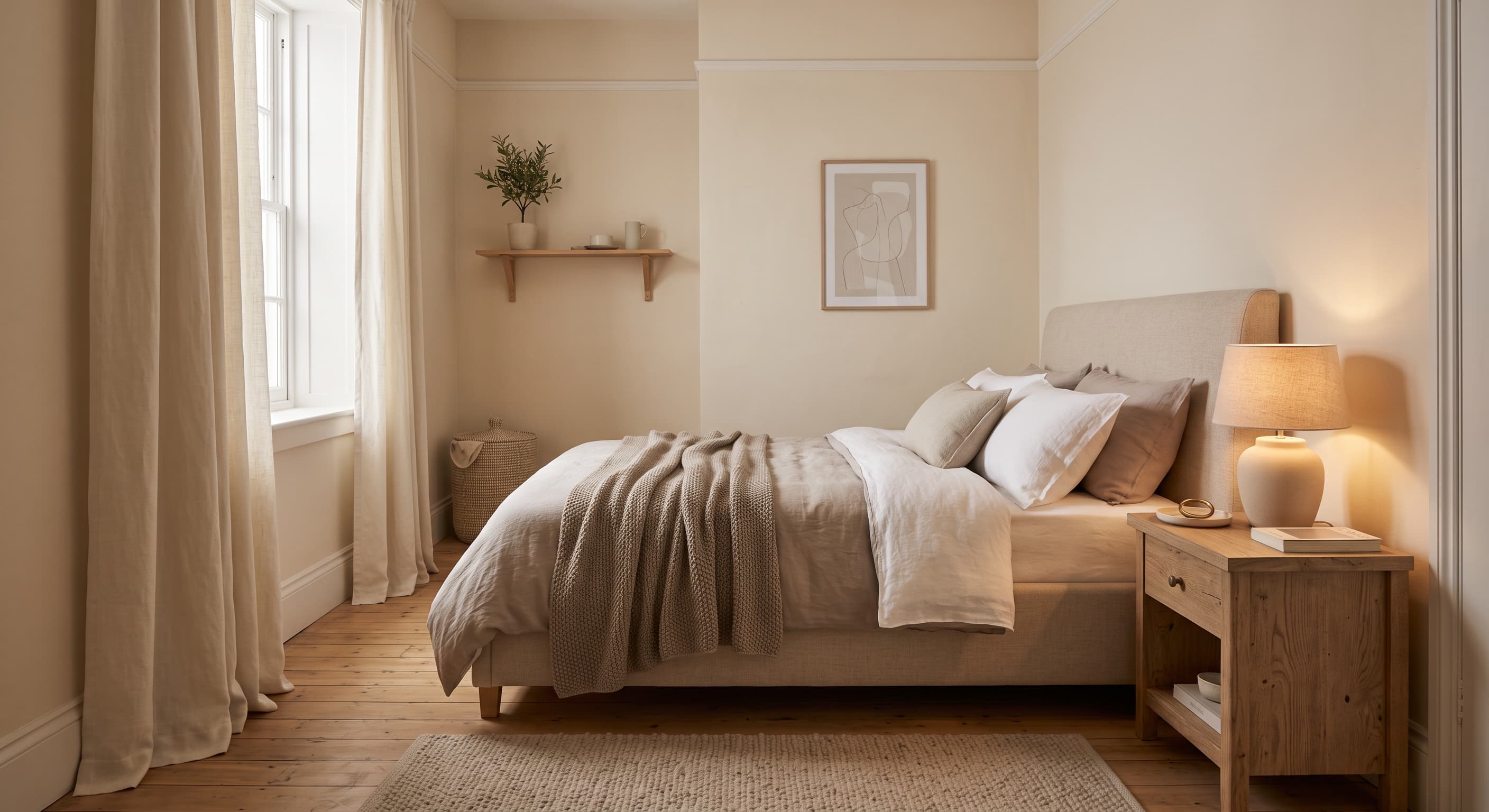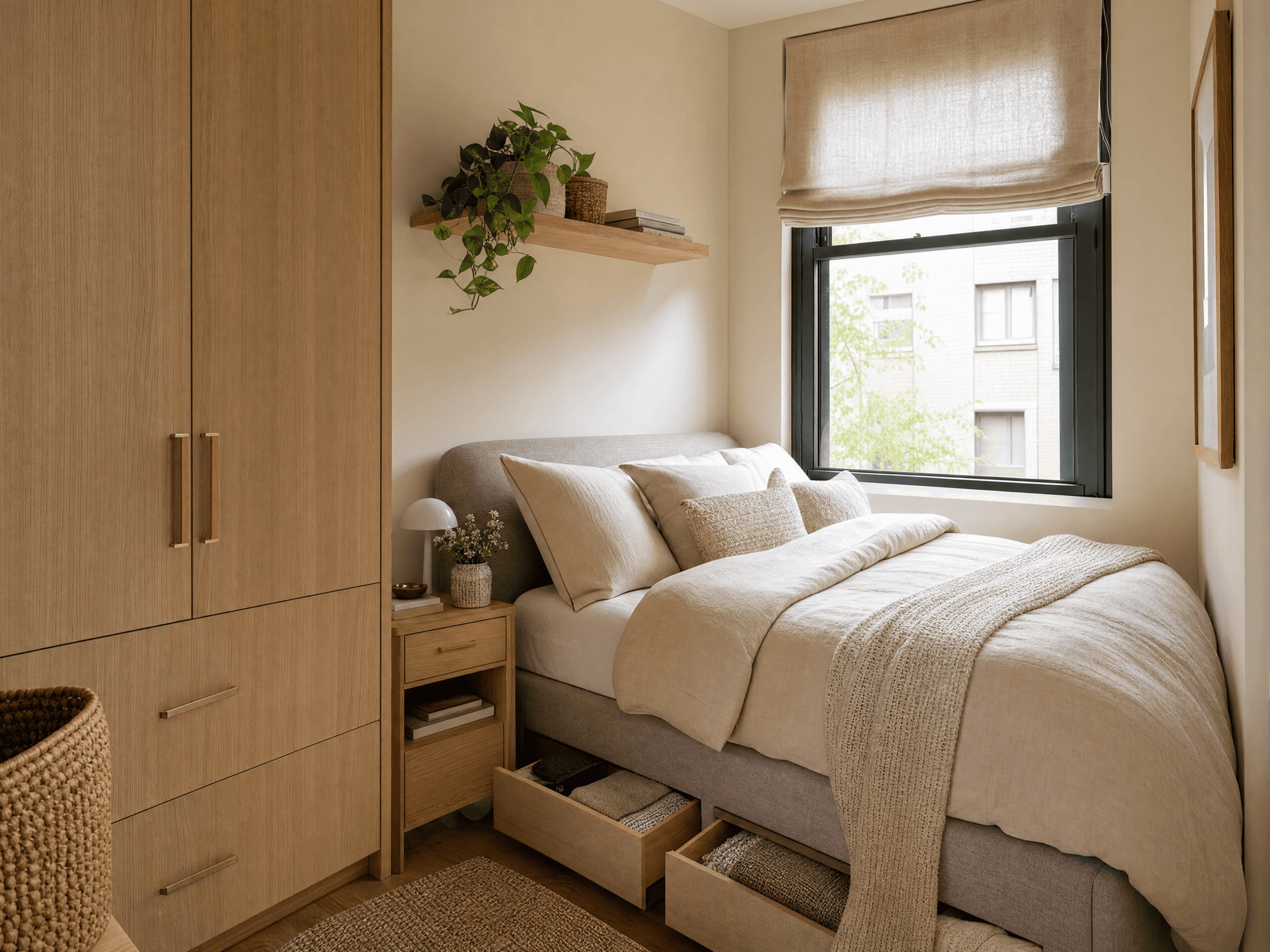
A small bedroom can run out of storage space surprisingly quickly. Clothes, shoes, extra bedding, bags, books, chargers, and everyday essentials all need somewhere to go, but adding more furniture can make an already compact room feel even smaller.
The best small bedroom storage ideas solve both problems at once. They create useful places to store your belongings while keeping as much visual and floor space free as possible.
That usually means looking beyond traditional storage. The empty area beneath the bed, the wall above a nightstand, the back of a door, and even the full height of a wardrobe can become valuable storage without making the bedroom feel crowded.
These ten ideas are designed for real small bedrooms and apartments. You do not need custom cabinetry or a complete renovation. Start with the areas creating the most clutter and choose the solutions that fit the way you actually use your room.
1. Turn the Space Under Your Bed Into Hidden Storage
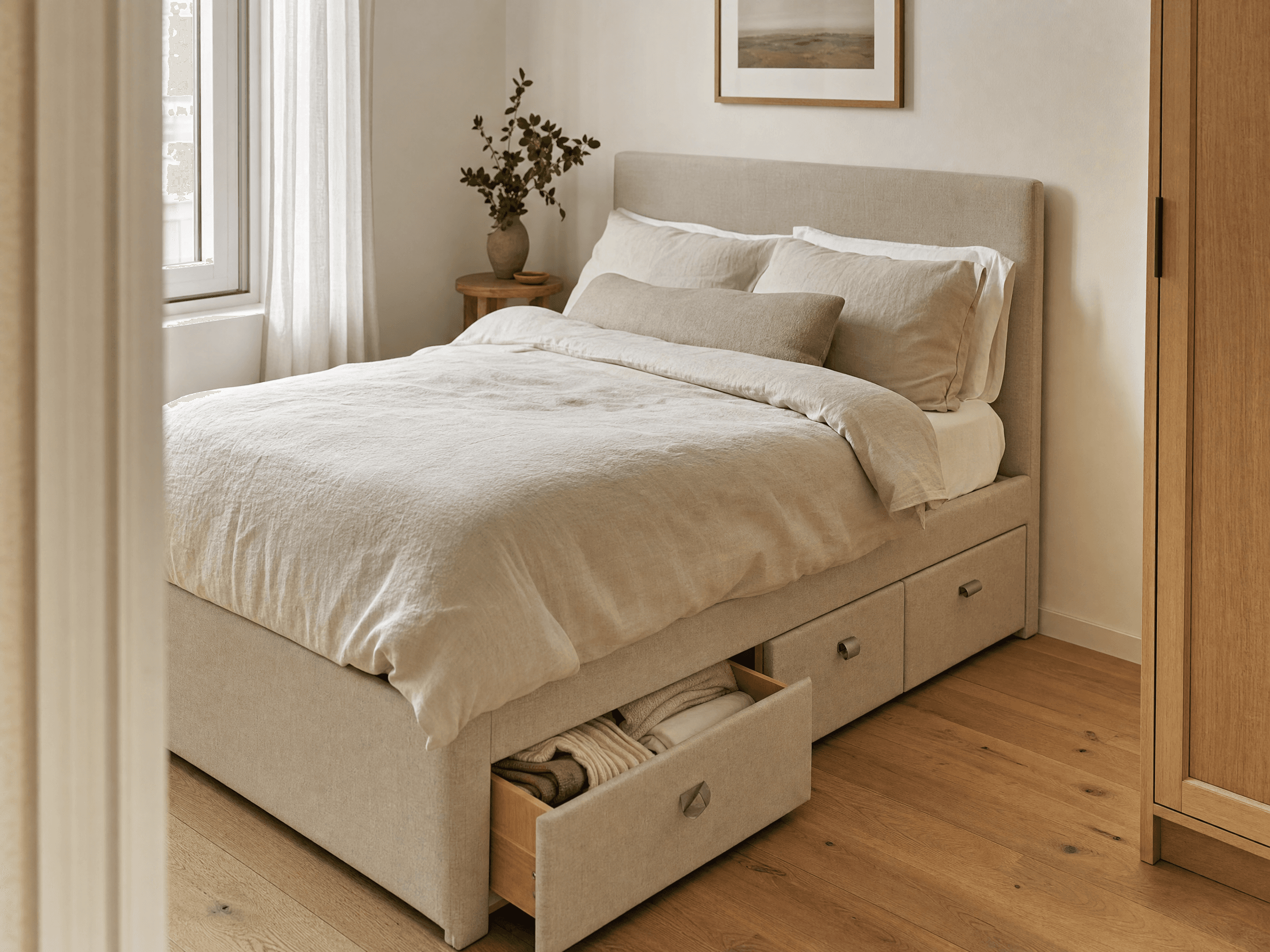
The area beneath the bed is often the largest unused storage space in a small bedroom. Instead of letting it collect dust or random boxes, turn it into an organized extension of your closet.
Beds with built-in drawers offer the cleanest solution, but you do not need to replace your bed. Low-profile storage containers can work just as well for extra bedding, seasonal clothing, shoes, or items you do not use every day.
Choose matching containers that fit completely beneath the frame whenever possible. Keeping them hidden preserves the calm appearance of the room while giving you a surprising amount of additional storage.
For things you access frequently, use containers with wheels or handles so you can reach them without moving the bed.
2. Take Your Wardrobe All the Way to the Ceiling
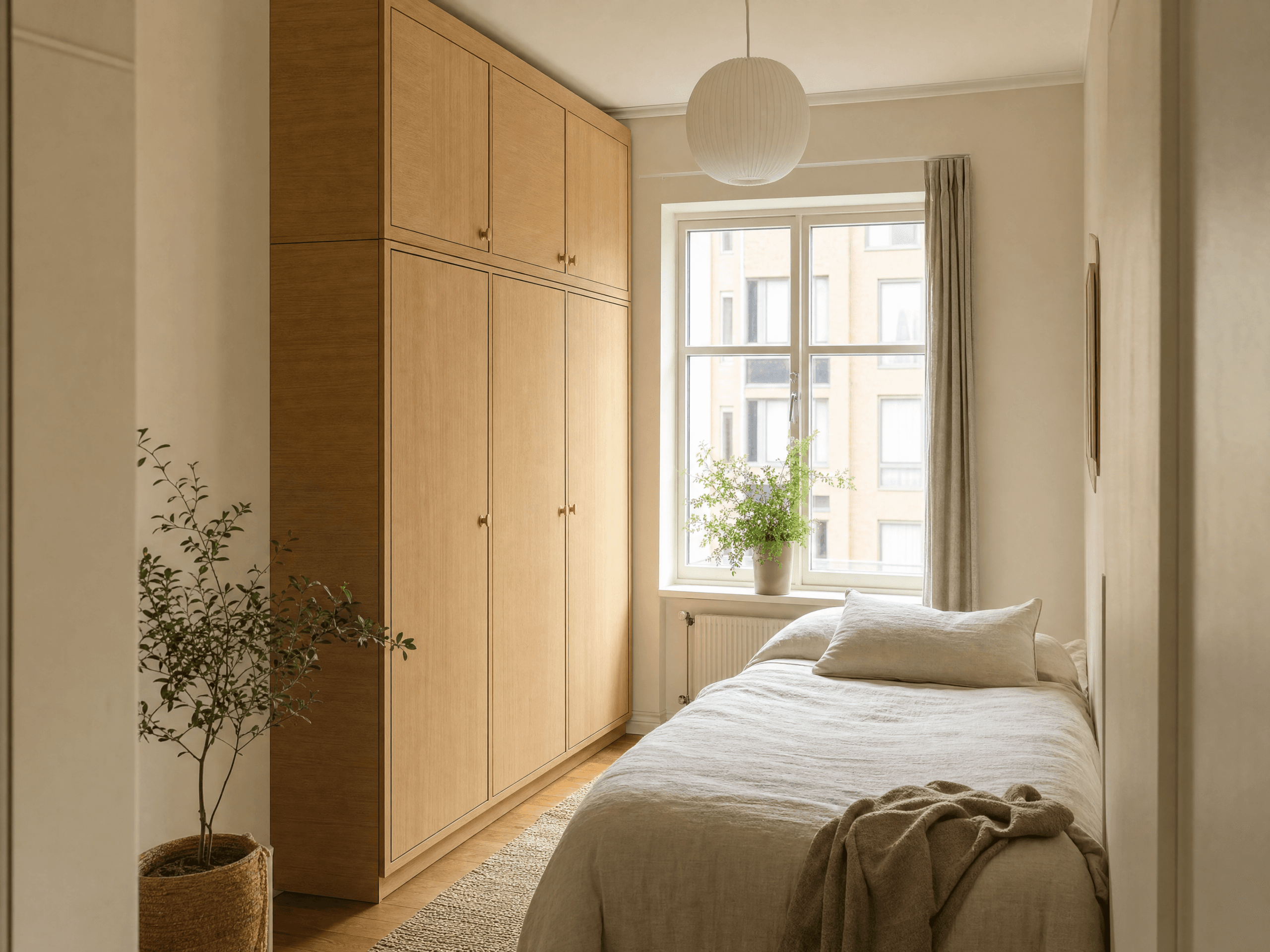
In a small bedroom, an ordinary wardrobe often wastes valuable space above it. Choosing storage that reaches close to the ceiling gives you considerably more capacity without using another centimeter of floor space.
Keep everyday clothes and accessories at an easy-to-reach height, then reserve the highest shelves for luggage, spare bedding, seasonal clothing, or storage boxes.
Tall wardrobes also tend to look cleaner because they eliminate the awkward gap where miscellaneous items often accumulate.
If built-in cabinetry is outside your budget, a tall freestanding wardrobe paired with matching storage boxes above it can create a similar visual effect.
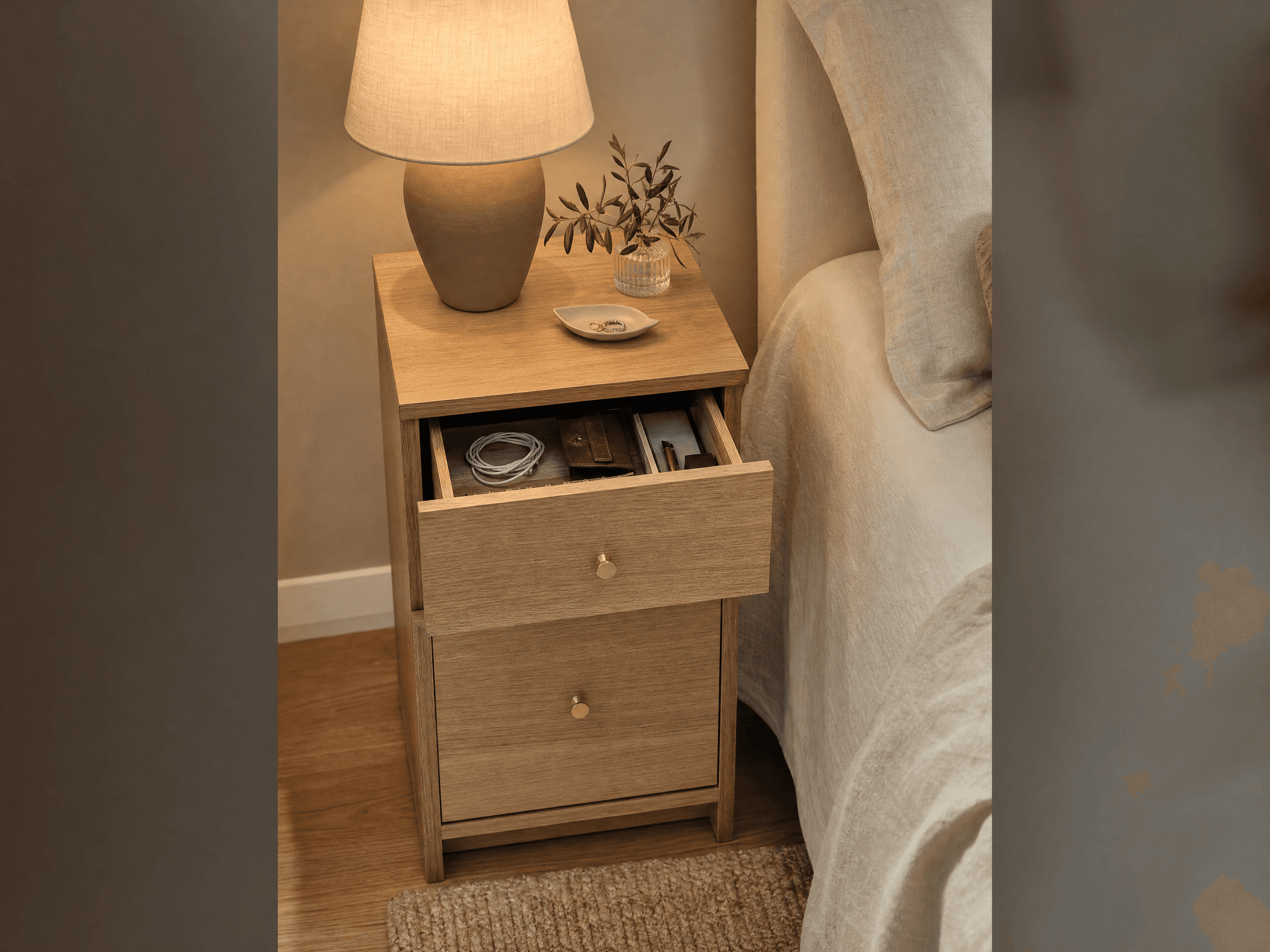
3. Replace a Basic Nightstand With One That Has Drawers
An open bedside table may look minimal, but in a tiny bedroom every piece of furniture should work as hard as possible. A compact nightstand with drawers gives you hidden storage without requiring additional floor space.
Use the drawers for chargers, medication, glasses, notebooks, skincare, and other small objects that otherwise accumulate beside the bed.
Keep the top relatively simple with a lamp and one or two essentials. Hiding the smaller items instantly makes the entire bedroom look more organized.
Look for narrow models rather than oversized bedside cabinets. Even a nightstand only slightly wider than a lamp can provide useful storage.
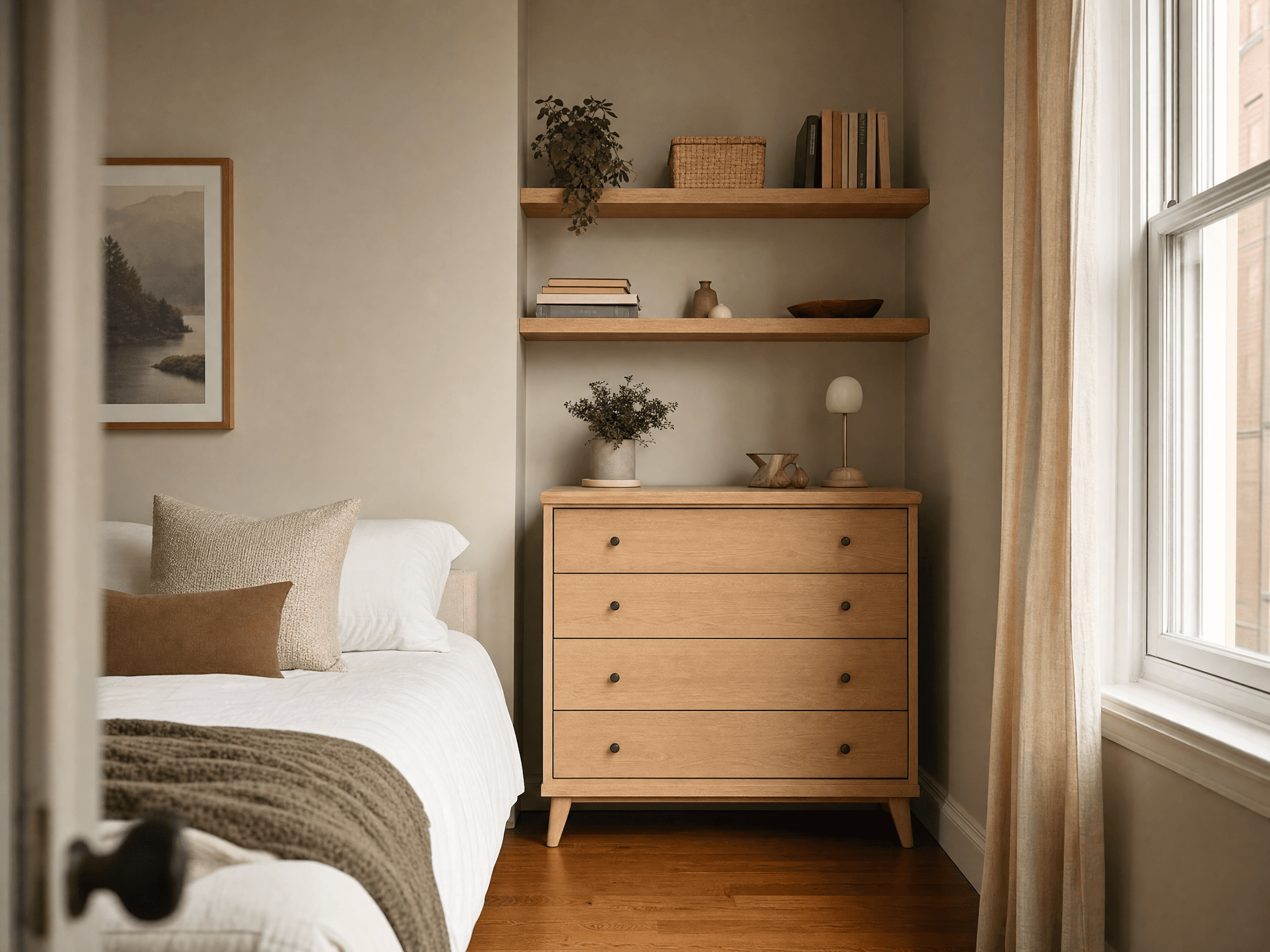
4. Use Floating Shelves Without Crowding the Floor
Walls provide valuable storage without taking away walking space. A few floating shelves can hold books, small baskets, framed art, or everyday items while leaving the floor completely clear.
The key is restraint. Covering every wall with shelves can make a small bedroom feel busier rather than more organized.
Install one or two shelves where they are genuinely useful, such as above a dresser, desk, or an otherwise empty corner.
Keep some empty space between objects on the shelves. Storage works best visually when it does not look completely full.
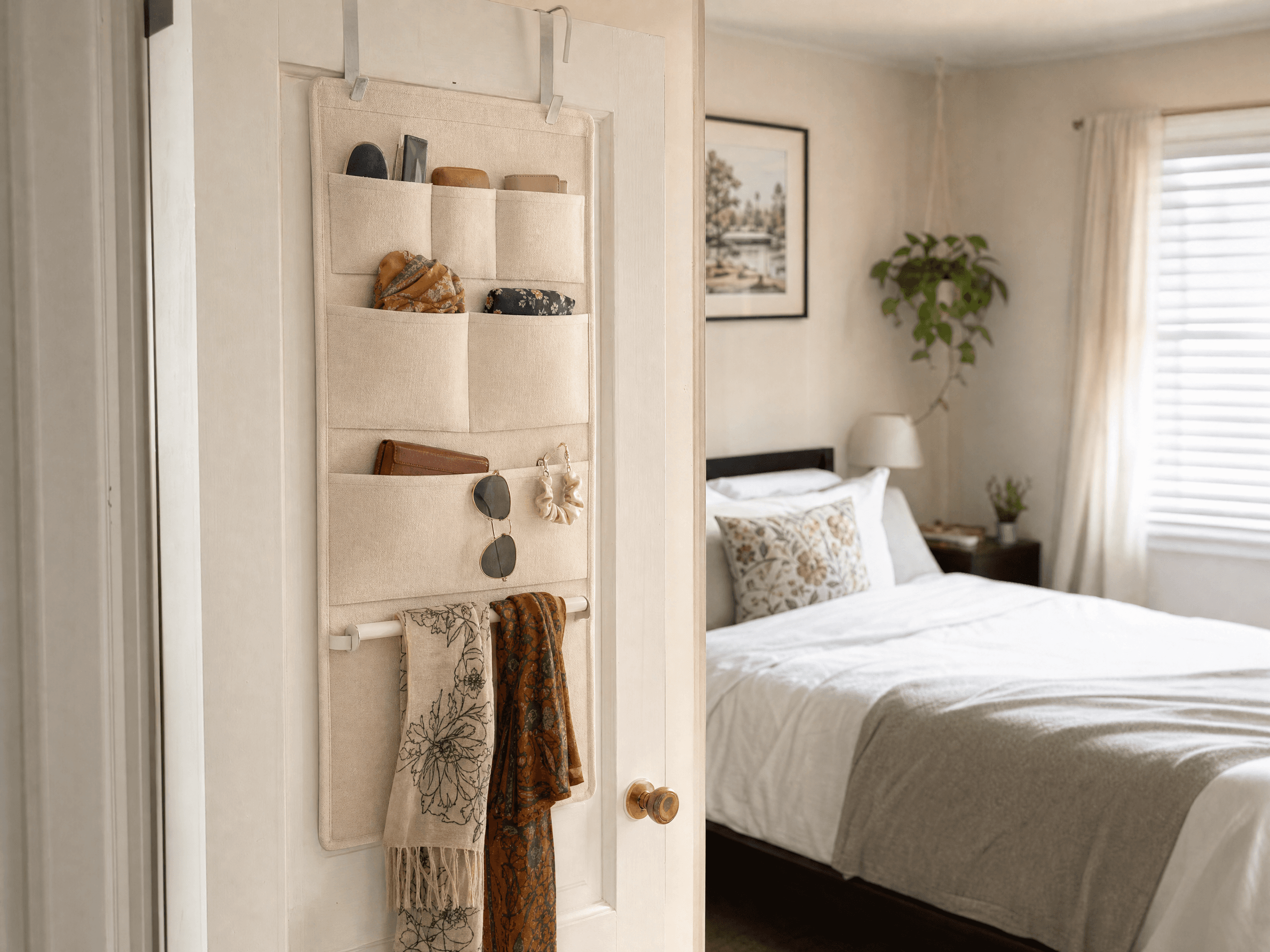
5. Use the Back of the Door for Everyday Storage
The back of a bedroom or closet door is easy to overlook, but it can hold items that otherwise take up valuable drawer or closet space.
Slim over-the-door organizers are useful for accessories, scarves, small bags, slippers, or frequently used items. Hooks can provide an even simpler solution for a robe, handbag, or tomorrow’s outfit.
Avoid loading the door with too many visible objects. Choose a slim organizer in a neutral color and give each pocket or hook a specific purpose.
This works particularly well in rentals because many over-the-door systems require no drilling or permanent installation.
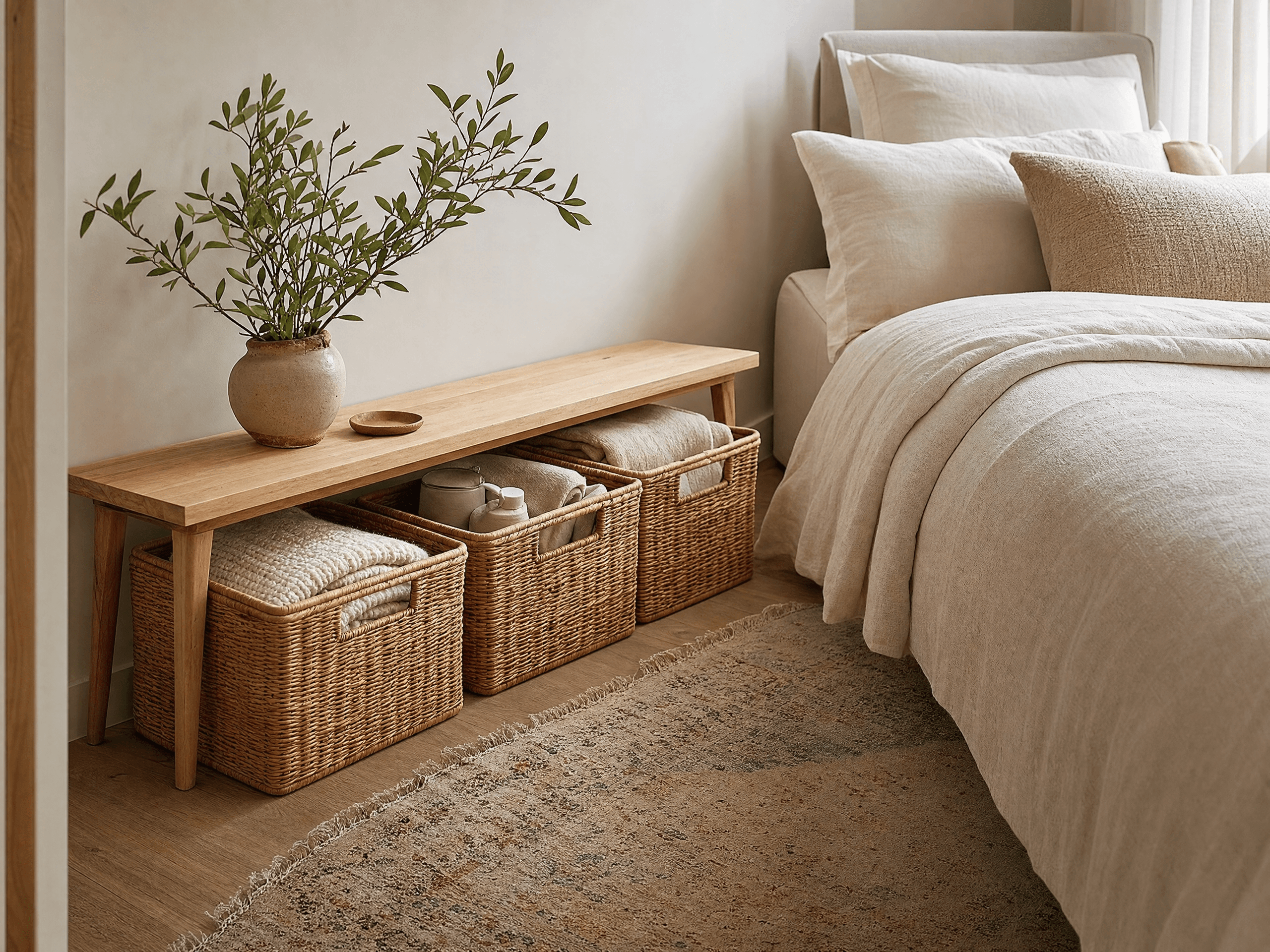
6. Add Storage Baskets That Actually Match
Baskets are useful for items that do not need their own drawer, but a collection of unrelated containers can create visual clutter.
Choose two or three matching baskets and use them for specific categories such as extra blankets, bags, workout gear, or laundry. Woven, fabric, or simple neutral containers tend to blend naturally into a bedroom.
Place them intentionally beneath a bench, on a shelf, or inside an open storage unit rather than scattering them around the floor.
Matching containers make inexpensive organization feel much more deliberate and can help open storage look almost built-in.
7. Create a Storage Zone Above the Bed
The wall above the bed can provide useful storage when the room has very little floor space. A shallow shelf or carefully installed wall cabinet can hold books, baskets, or less frequently used items.
Keep the storage relatively shallow so it does not visually dominate the bed. Closed cabinets create the cleanest appearance, while an open shelf works well when you have only a few items to display.
Secure anything mounted above the bed properly and avoid placing heavy, unstable objects on open shelving.
When done carefully, this turns an otherwise unused wall into practical storage while keeping the rest of the room open.
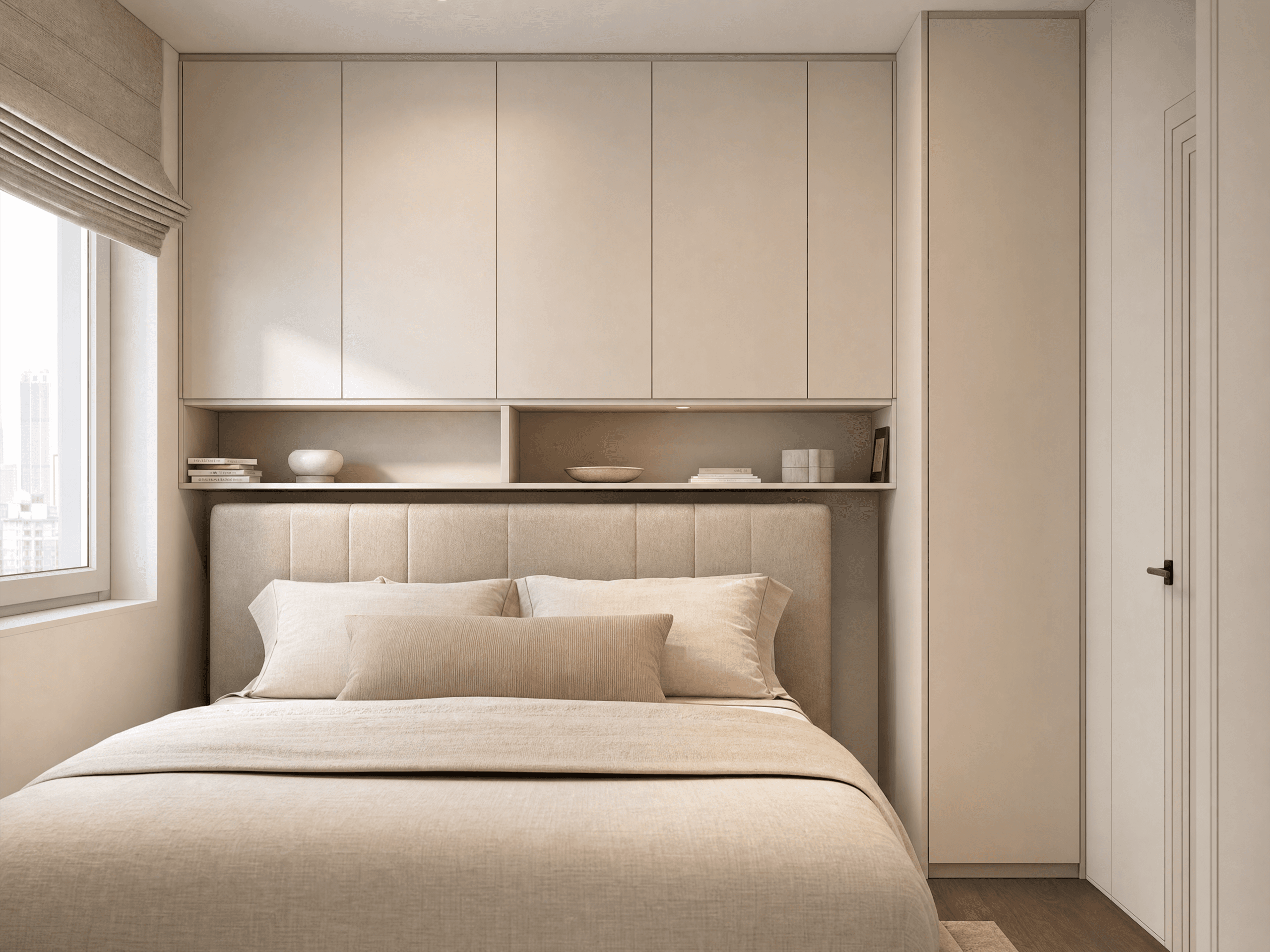
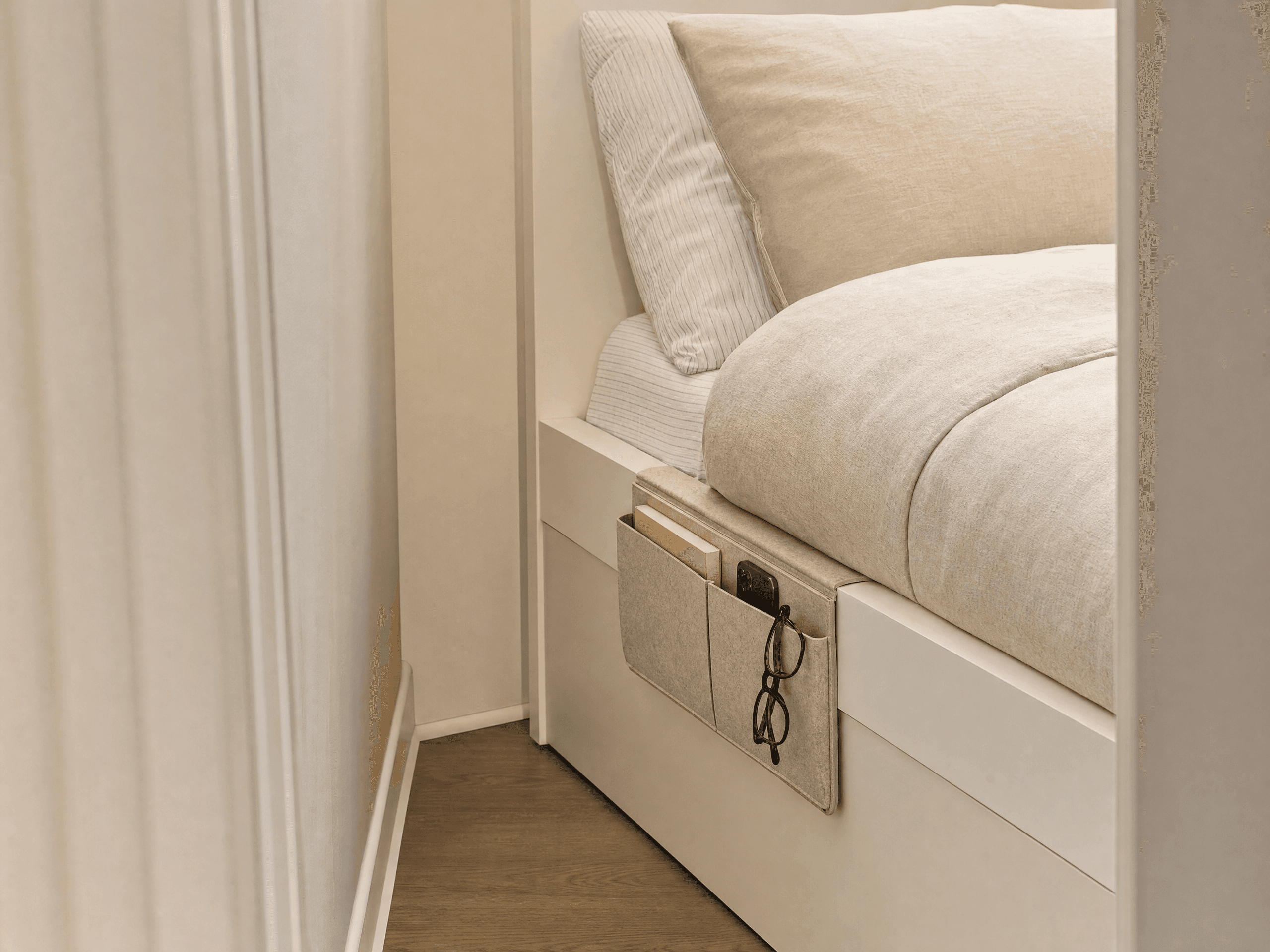
8. Choose a Bedside Caddy for Extremely Tight Spaces
Some bedrooms simply do not have enough space for a traditional nightstand. In that case, a slim bedside caddy can hold the essentials without taking up any floor area.
Look for a fabric or felt organizer that slips beneath the mattress or attaches securely to the bed frame. It can hold a phone, book, remote, glasses, or charging cable.
Keep only frequently used items inside so the organizer stays flat and easy to access.
It is a simple solution, but in a very narrow bedroom, eliminating even one small piece of furniture can noticeably improve circulation around the bed.
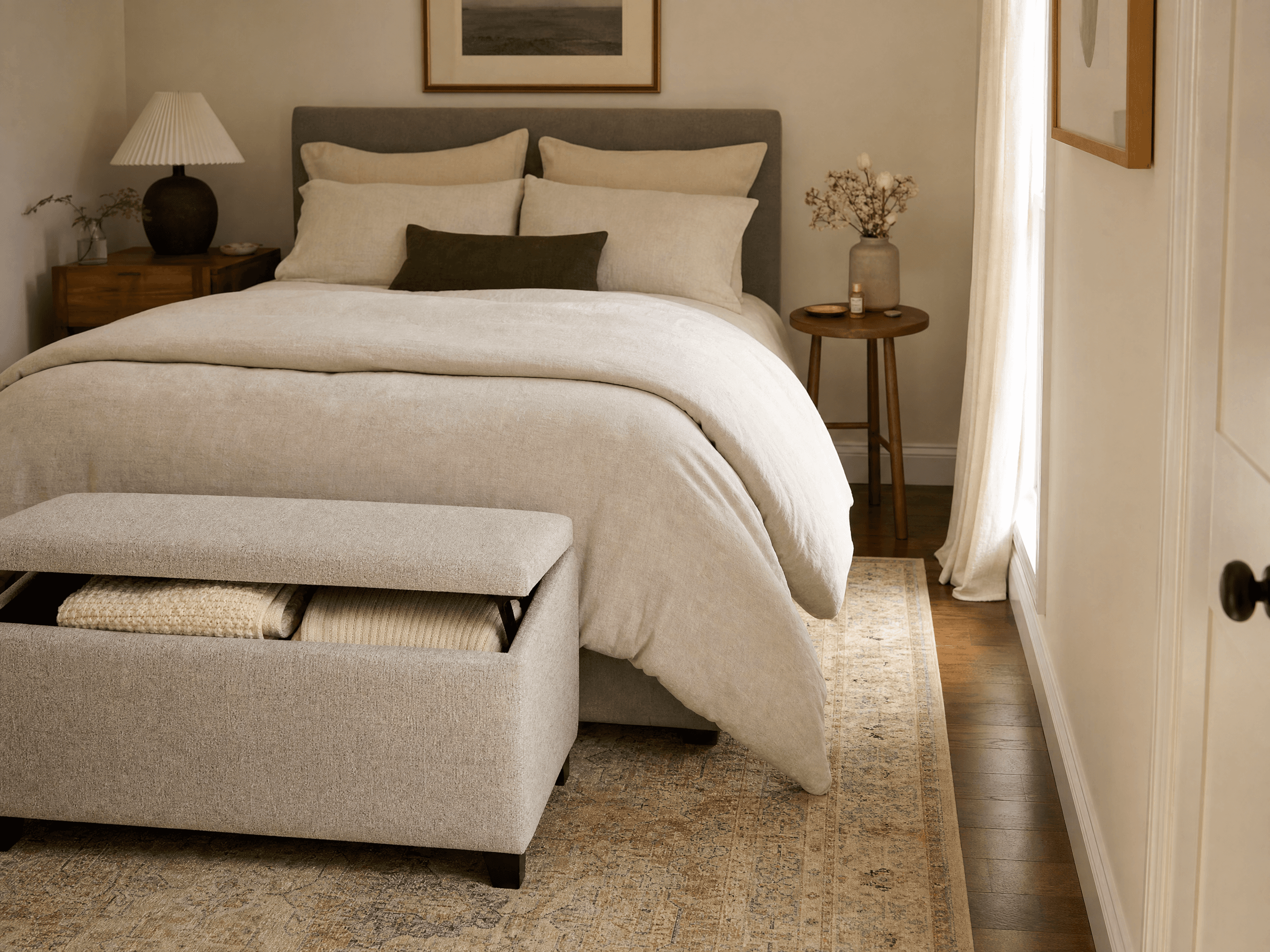
9. Use One Slim Storage Bench at the Foot of the Bed
If your bedroom has enough clearance at the foot of the bed, a narrow storage bench can provide seating and hidden storage in a single piece of furniture.
Use the interior for extra blankets, pillows, bags, or seasonal items. A lift-up upholstered bench keeps everything completely out of sight.
Choose a bench that is narrower than the mattress and does not block the main walking path. In very small rooms, skip this idea rather than squeezing in furniture that makes movement uncomfortable.
Multipurpose furniture is most useful when it replaces another piece rather than simply adding more to the room.
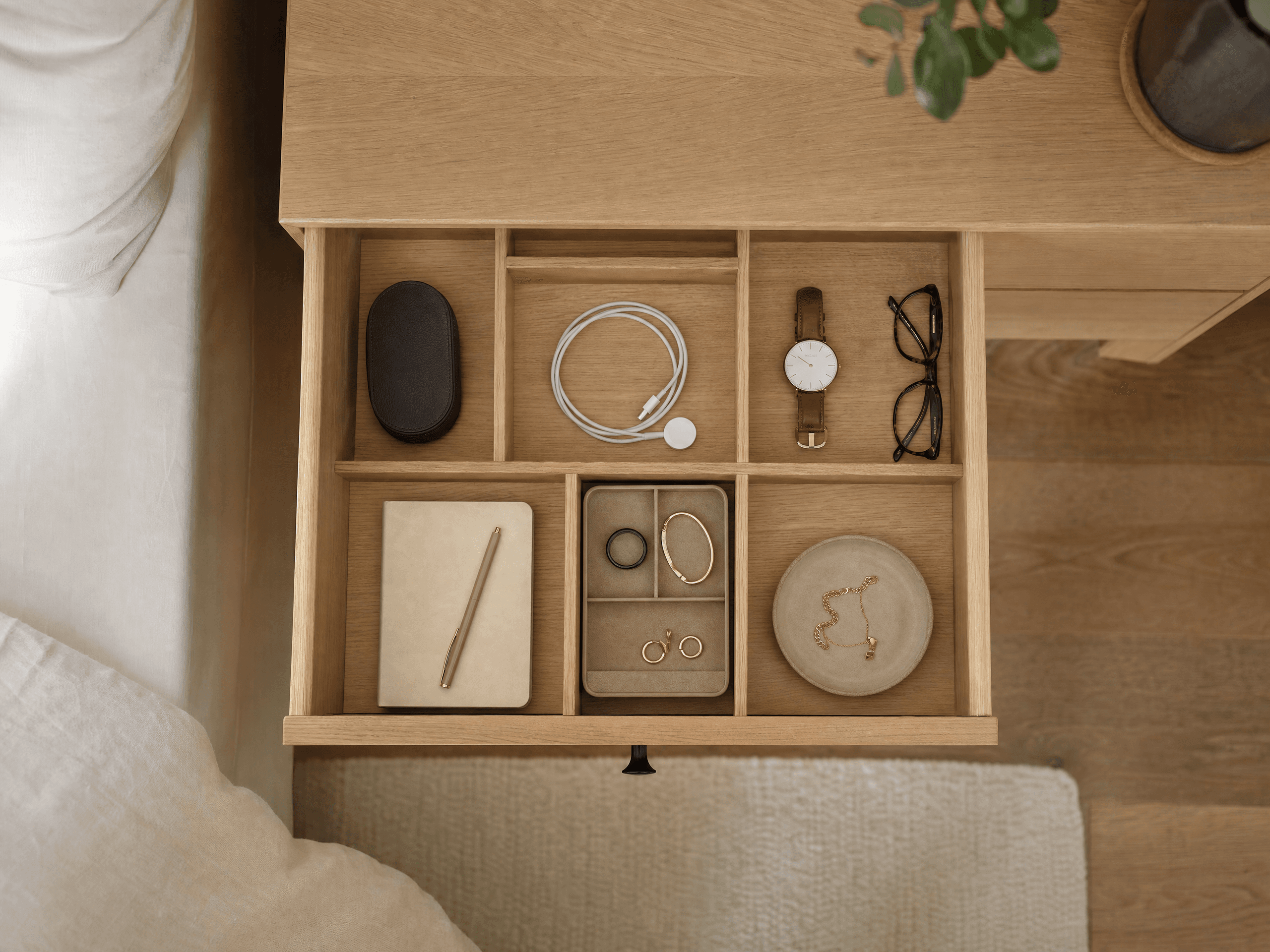
10. Give Every Small Item a Hidden Home
Small objects are often responsible for more visible clutter than large ones. Chargers, receipts, cosmetics, jewelry, keys, and miscellaneous accessories quickly spread across nightstands and dressers when they do not have assigned places.
Use drawer dividers, small boxes, trays inside drawers, and labeled containers to create simple categories. The exact system matters less than knowing where each item belongs.
Avoid creating overly complicated organization that takes more effort to maintain than the clutter itself. Storage should make putting something away almost automatic.
Once everyday items disappear from visible surfaces, even a very small bedroom can feel dramatically calmer, larger, and more intentional.
Where Should You Start in a Small Bedroom?
Do not try to add every storage idea at once. Start by identifying what currently creates the most clutter.
If clothing and bedding are the problem, improve under-bed storage or use more of the height inside your wardrobe. If small objects cover your nightstand, add drawers or organizers. If the floor is crowded with furniture, move some storage onto the walls instead.
Before buying a new organizer, decide exactly what it will store and where it will live. This prevents storage products themselves from becoming another source of clutter.
The goal is not to fit as many belongings as possible into a tiny room. It is to make the things you actually use easy to store, easy to find, and easy to put away while keeping the bedroom comfortable and visually calm.
How do I maximize storage in a very small bedroom?
Use areas that do not require additional floor space. Under-bed containers, tall wardrobes, wall shelves, over-the-door organizers, and furniture with built-in drawers can add useful storage while keeping walking areas open.
What should I store under my bed?
Under-bed storage works particularly well for extra bedding, seasonal clothing, shoes, bags, and items you do not need every day. Use closed containers or built-in drawers to protect belongings from dust and keep the room looking organized.
How can I organize a small bedroom without buying more furniture?
Start by using the storage you already have more efficiently. Clear unused items, organize drawers, use the space beneath the bed, add hooks behind the door, and make better use of vertical wall and closet space.
Do shelves make a small bedroom look cluttered?
They can if they are overcrowded. Use only a few shelves, group similar items together, and leave some empty space. Closed storage is usually better for objects that are visually messy.
How do I make storage look good in a small bedroom?
Keep visible storage consistent with the room. Matching baskets, neutral containers, simple cabinetry, and repeated materials help storage blend into the decor. Hide smaller or colorful everyday items inside drawers and closed containers.