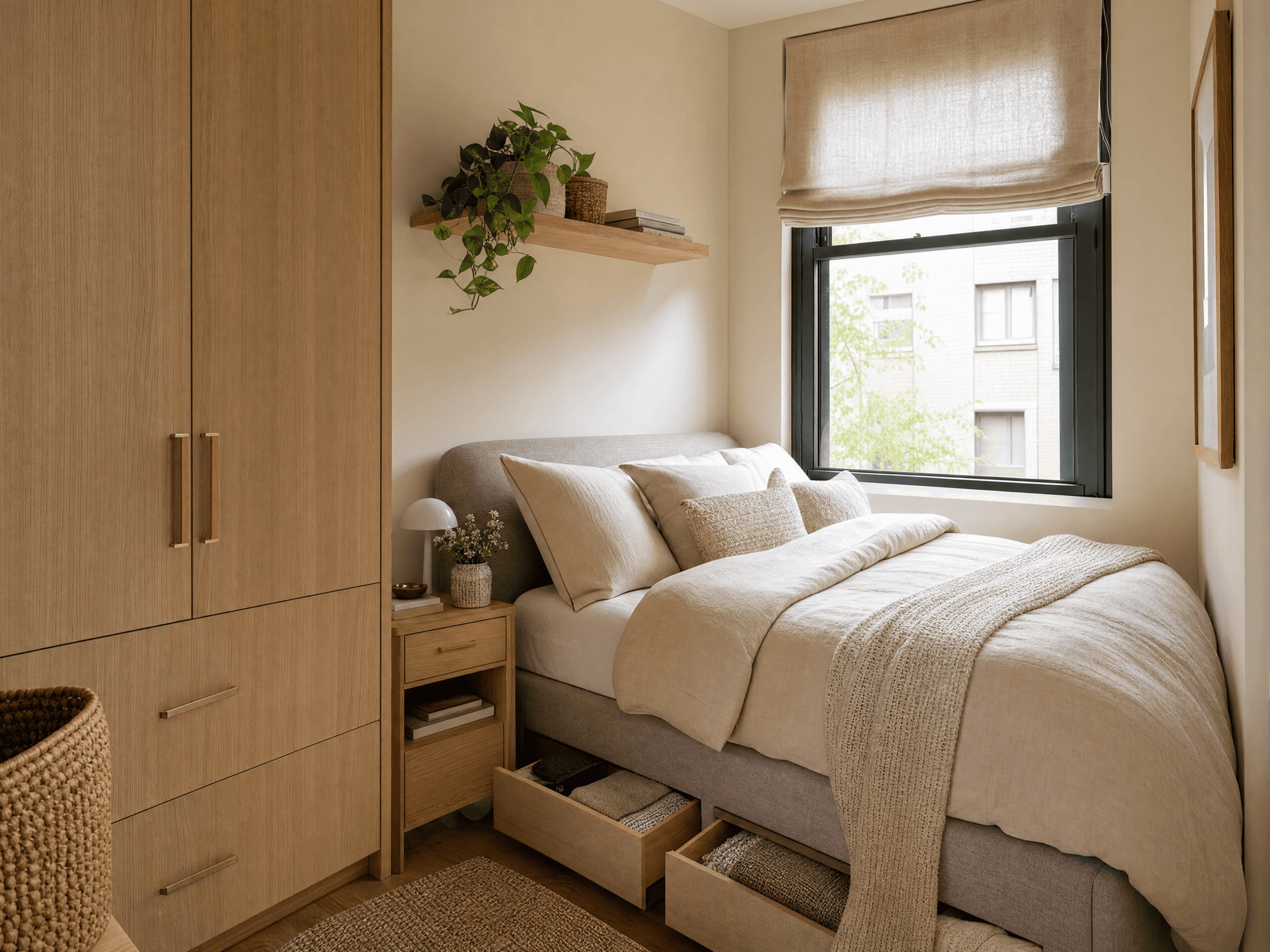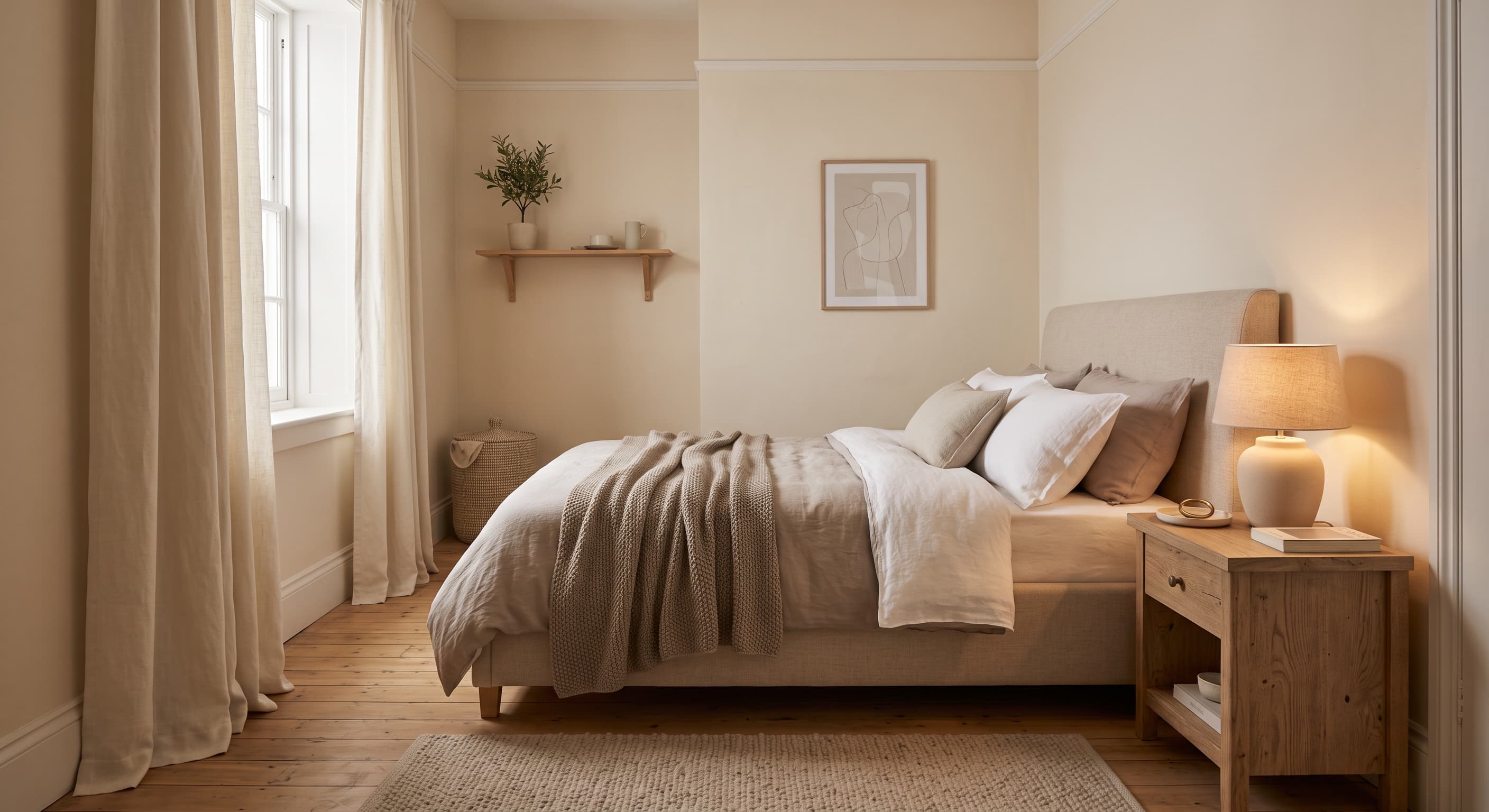
A small bedroom does not have to feel cramped, plain, or temporary. In fact, a compact room can become one of the coziest spaces in your home when every detail feels intentional.
The secret is not filling the room with expensive furniture. It is choosing a few elements that create warmth, texture, balance, and a sense of calm. Soft lighting, layered bedding, warm neutral colors, thoughtful storage, and well-placed decor can completely change how a small bedroom feels.
These cozy small bedroom ideas are designed to work in real apartments, rentals, guest rooms, and tiny bedrooms. Some require nothing more than rearranging what you already own, while others are simple upgrades you can add gradually.
Whether your style is minimal, modern, romantic, Scandinavian, or somewhere in between, use these ideas as inspiration rather than strict rules. The goal is to create a bedroom that feels comfortable, personal, and much more luxurious than its size or budget might suggest.
1. Layer Your Bedding
One of the fastest ways to make a small bedroom feel more luxurious is to give the bed more visual depth. Instead of using only a fitted sheet, duvet, and two pillows, build several soft layers.
Start with crisp or softly textured bedding in a neutral base color. Add two or three pillows in slightly different shades, then finish the bed with a folded quilt or throw blanket across the lower third.
The layers do not need to match perfectly. In fact, mixing linen, cotton, knit, and lightly textured fabrics often creates a more relaxed and expensive-looking result.
In a small bedroom, the bed is usually the largest object in the room. Making it look intentional immediately makes the entire space feel more polished.
2. Choose Warm, Soft Lighting
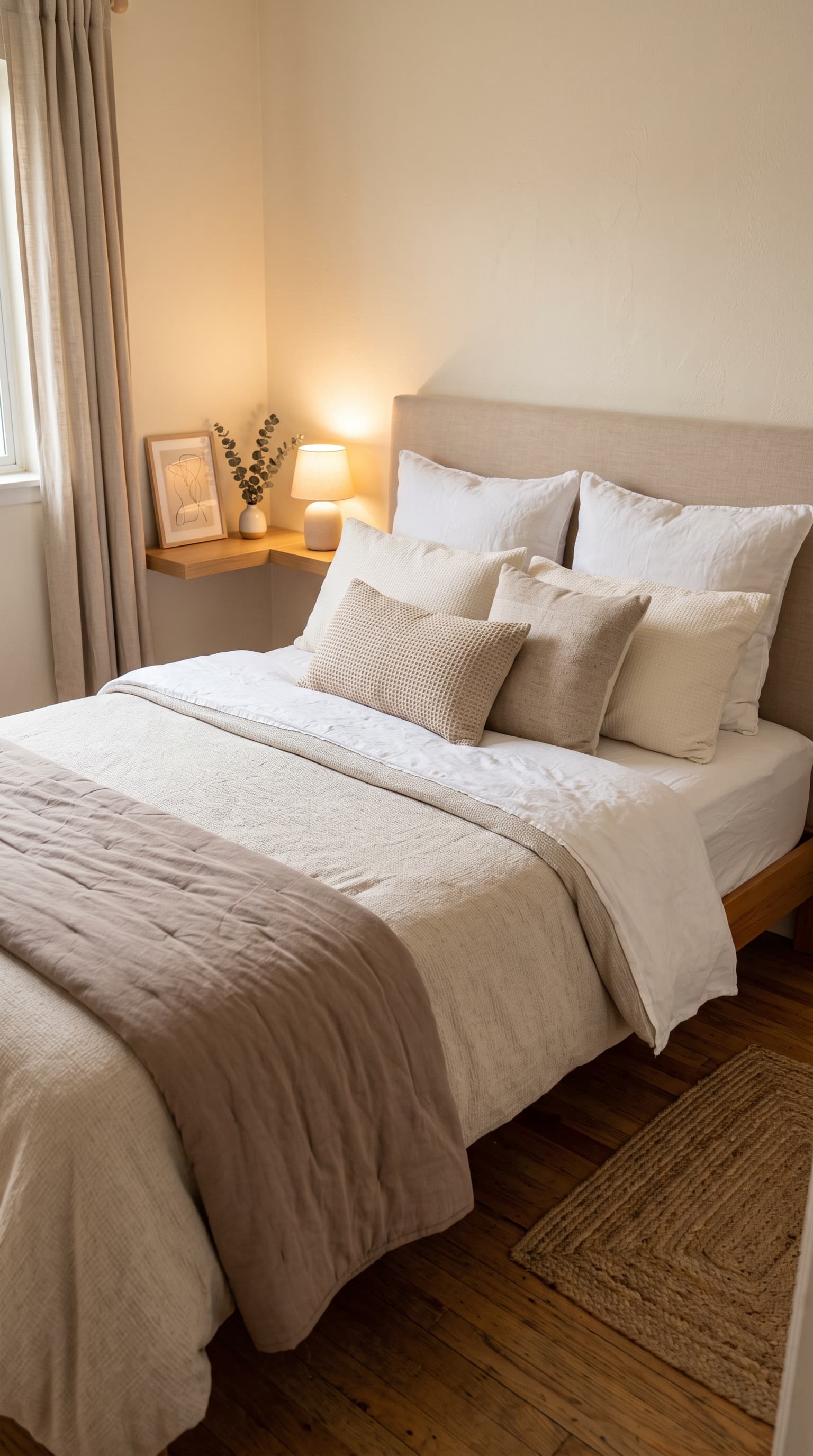
Lighting has an enormous effect on how cozy a bedroom feels. A bright ceiling light can make even a beautifully decorated room feel flat, while several softer light sources create depth and atmosphere.
Use warm bedside lamps, wall sconces, or a small floor lamp instead of relying only on the main ceiling fixture. Warm white bulbs generally feel more relaxing in bedrooms than cool, blue-toned light.
For an especially cozy effect, place lights at different heights. A bedside lamp creates one pool of light, while a wall sconce or subtle accent light adds another.
You do not need many lamps. Even two well-placed warm light sources can make a small bedroom feel dramatically more intimate and refined.
3. Use a Warm Neutral Color Palette
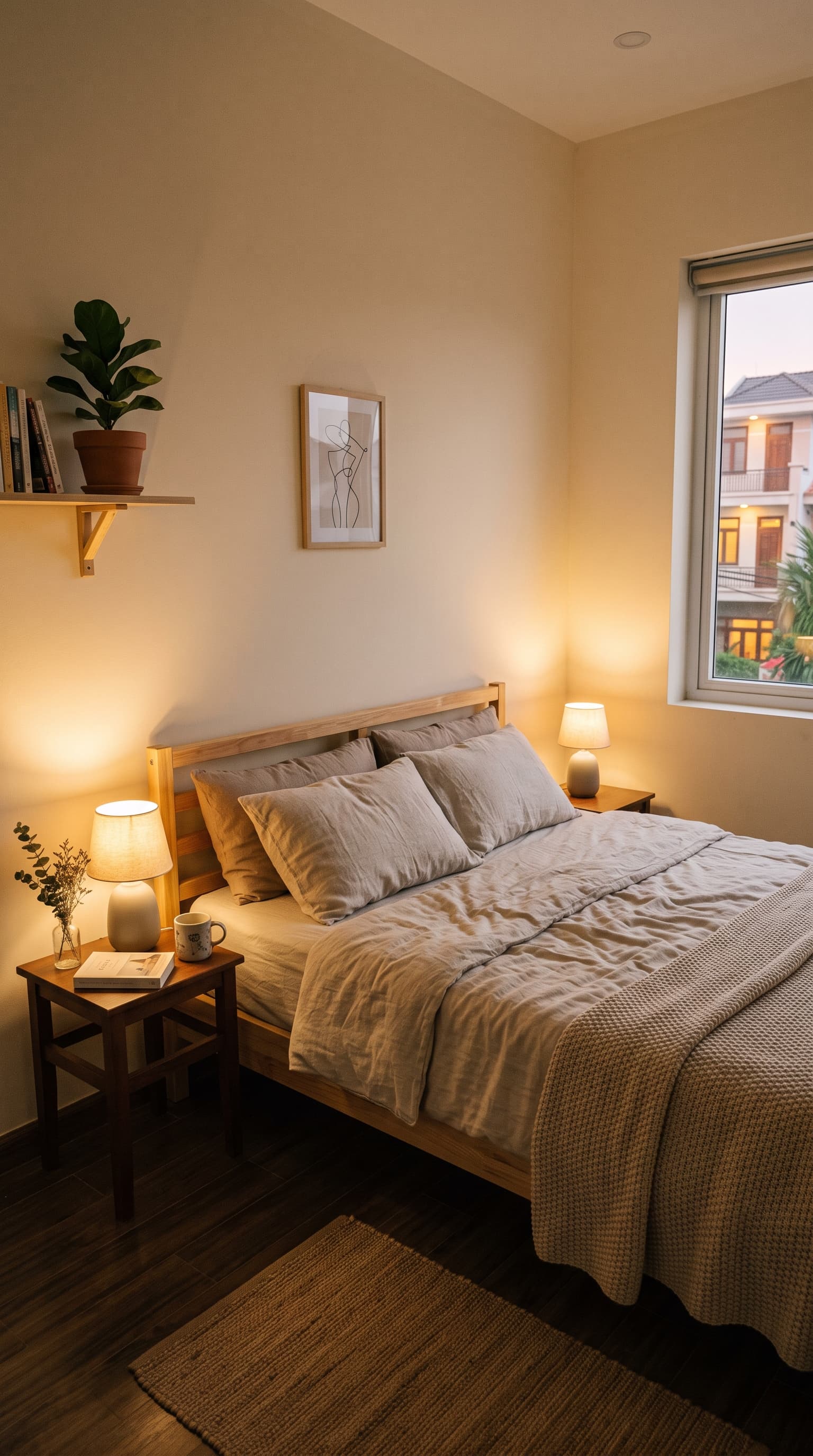
Warm neutrals are particularly effective in small bedrooms because they keep the room visually calm without making it feel cold.
Think ivory, cream, mushroom, warm beige, soft taupe, muted greige, and light wood. You can use several of these colors together instead of decorating the entire room in one shade.
The subtle variations create dimension while maintaining a cohesive look. Darker accents, such as chocolate brown, charcoal, or black, can then be added in small amounts for contrast.
A restrained palette also makes inexpensive furniture and accessories look more coordinated, which helps the room feel intentionally designed.
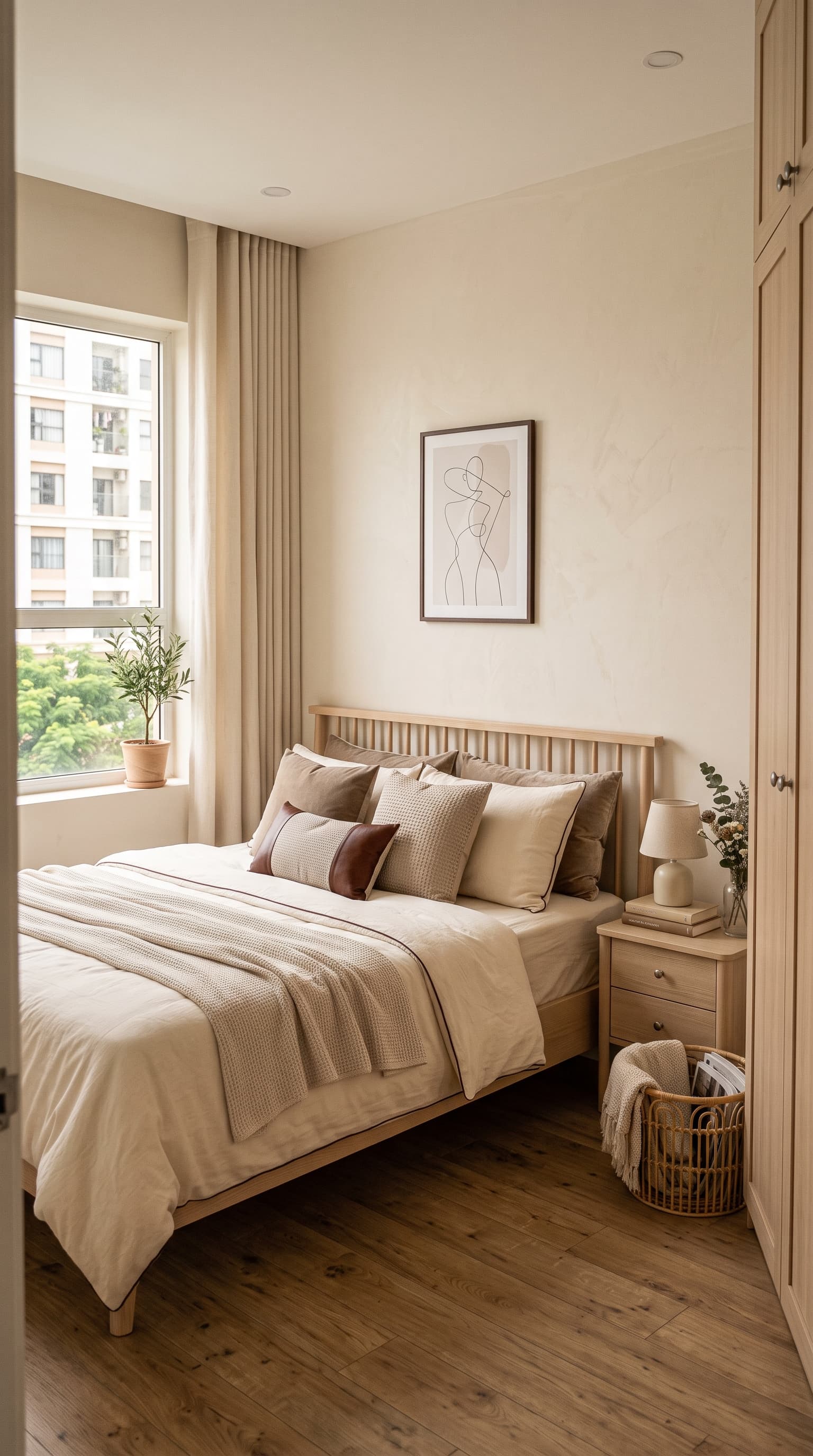
4. Hang Curtains Higher Than the Window
Curtains can visually change the proportions of a tiny bedroom. Instead of placing the curtain rod directly above the window frame, mount it closer to the ceiling whenever possible.
Let the curtains fall almost all the way to the floor. This draws the eye upward and makes the walls appear taller.
Choose curtains with enough width to create soft folds even when they are closed. Thin, undersized curtain panels often make a room look less finished.
Light-filtering linen-look curtains are especially versatile because they soften daylight while adding texture without making the bedroom feel heavy.
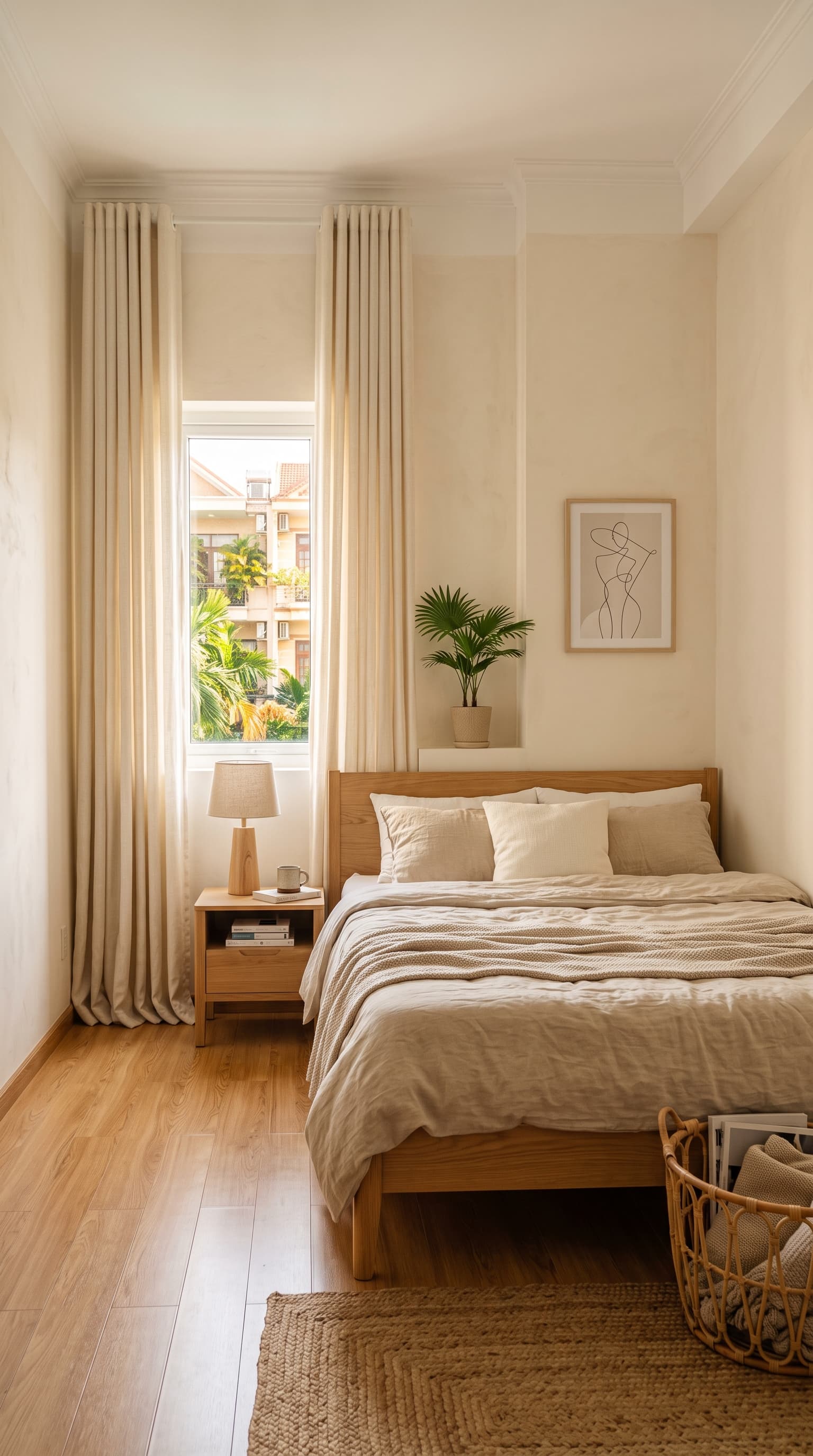
5. Add an Oversized Headboard
An oversized headboard can make a small bedroom look surprisingly high-end. Because the bed already occupies a large portion of the room, emphasizing it can create a strong focal point rather than trying to hide its size.
A padded headboard in beige, oatmeal, muted olive, or another soft tone adds comfort and texture. Extending the headboard wider than the mattress can make the wall feel intentionally designed.
If replacing the bed is not practical, similar visual impact can be created with a wall-mounted upholstered panel or a simple DIY fabric headboard.
Keep the rest of the wall relatively restrained so the feature feels sophisticated rather than crowded.
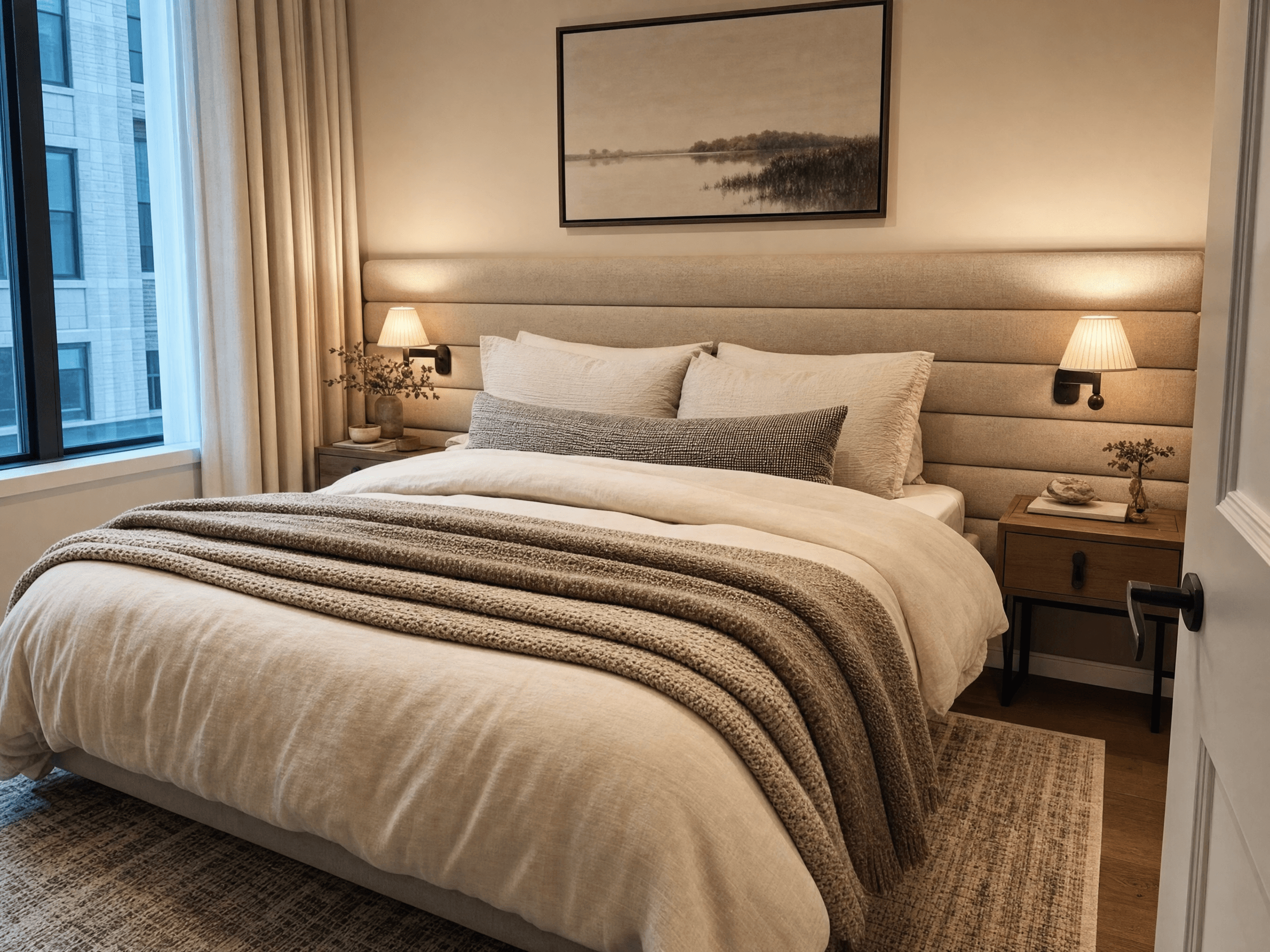
6. Use Matching Bedside Lights
Symmetry is an easy way to make a bedroom look more polished. Matching lamps or wall sconces on either side of the bed create visual order, even when the furniture itself is inexpensive.
In a very narrow room, wall-mounted sconces are particularly useful because they keep the tops of the nightstands free.
You do not need perfectly identical bedside tables. The repeated lighting alone can provide enough symmetry to make the setup feel cohesive.
Choose simple fixtures rather than overly decorative ones. Clean shapes and warm light tend to look timeless and are easier to combine with changing decor.
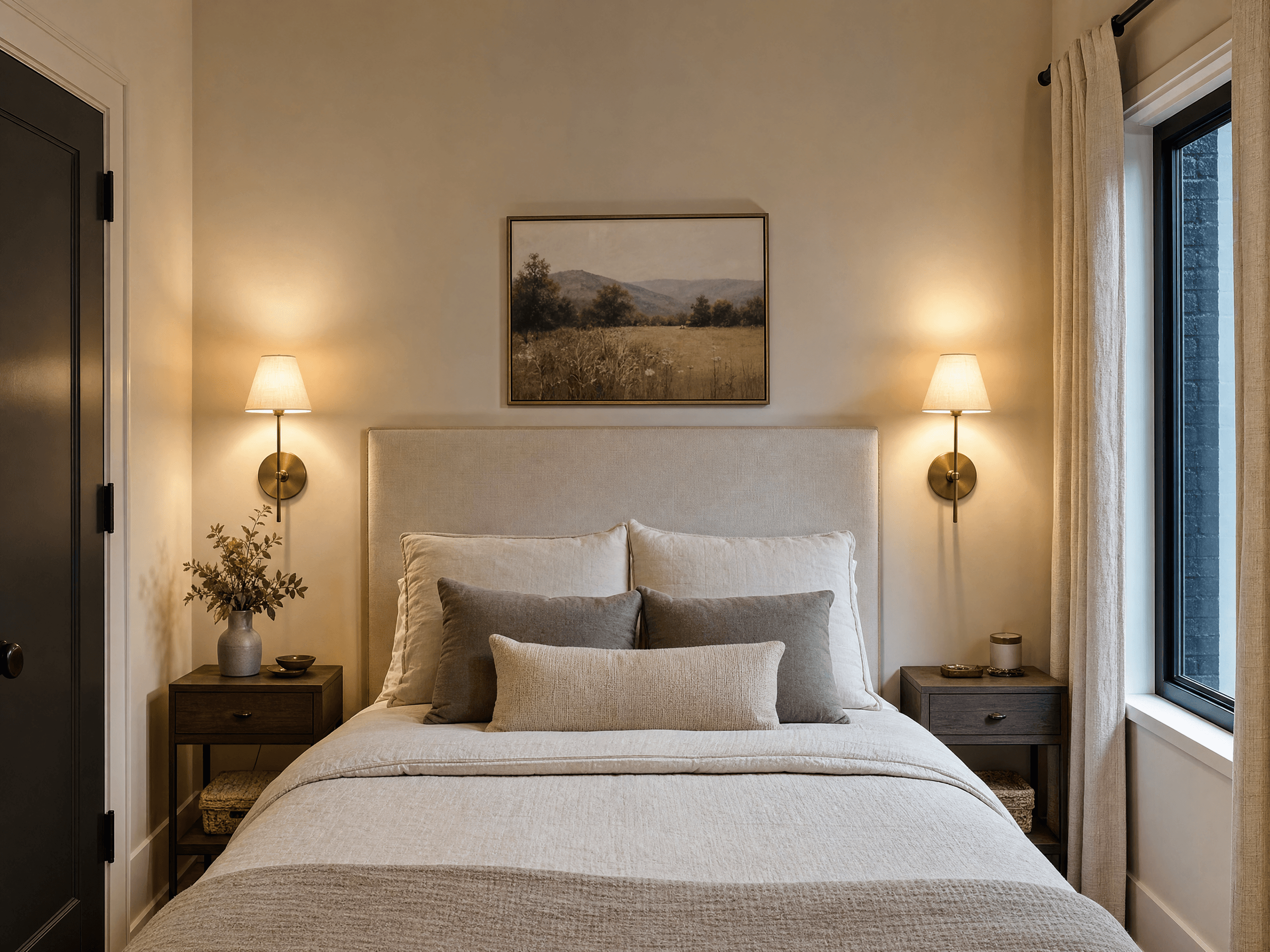
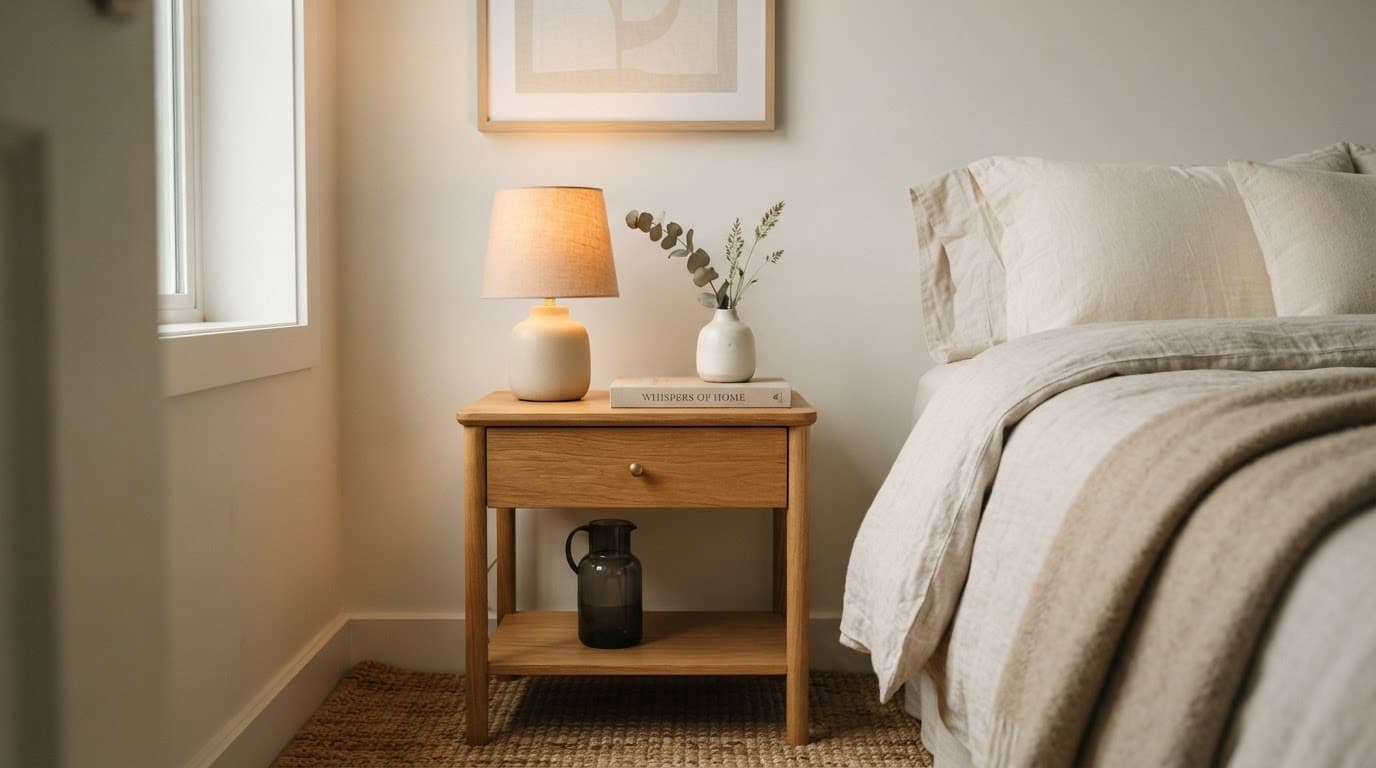
7. Replace Clutter With One Styled Nightstand
Small bedrooms become visually crowded quickly, so bedside surfaces have a big impact. Instead of filling the nightstand with chargers, bottles, books, and miscellaneous objects, keep only a few items visible.
A small lamp, one book, and a simple decorative object or vase can be enough. Store everything else in a drawer, basket, or bedside organizer.
The goal is not to make the room look unused. It is to give everyday objects intentional places.
Leaving some empty surface space is one of the simplest ways to make a small bedroom feel calmer and more expensive.
8. Add Texture Instead of More Color
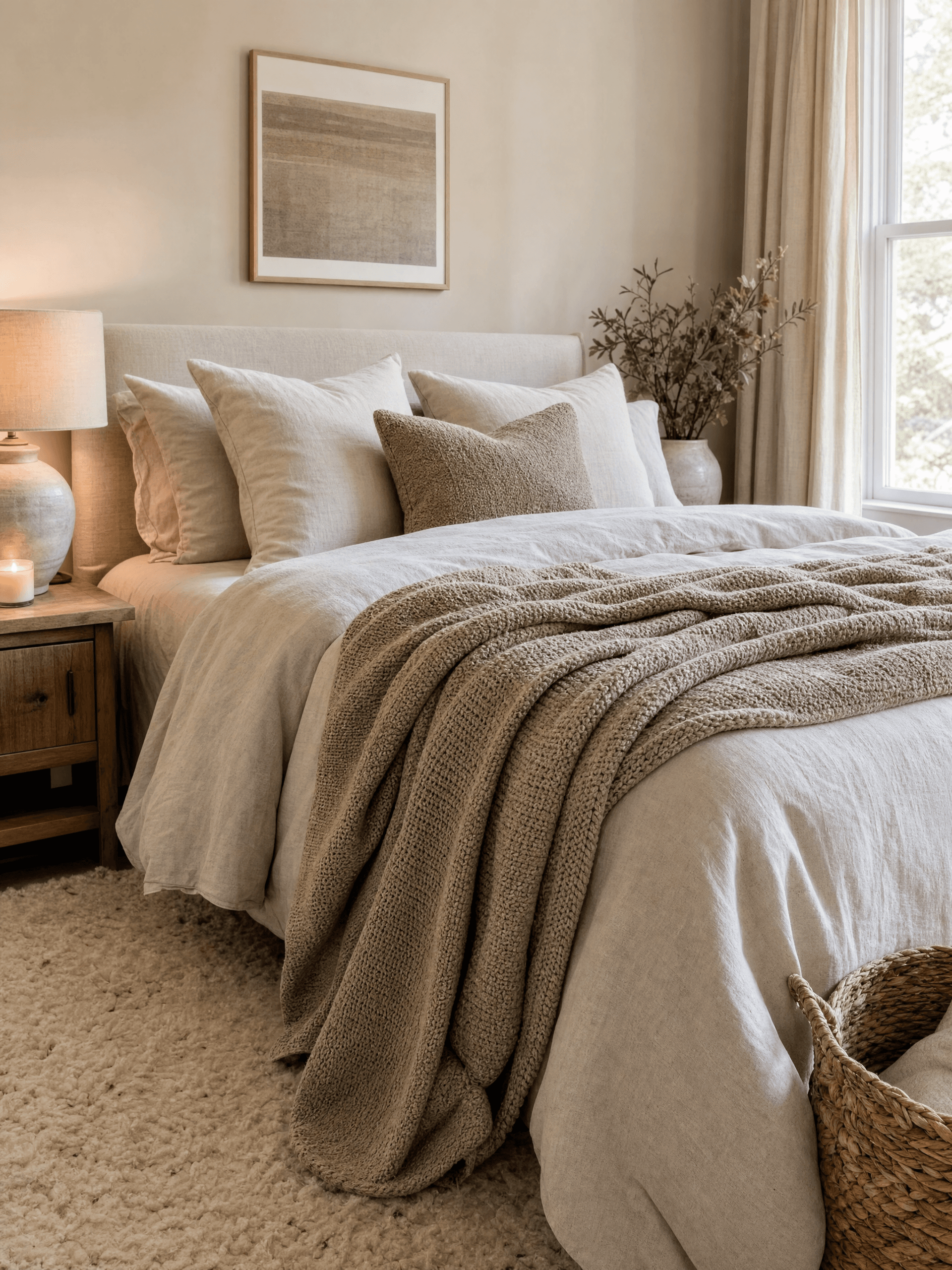
When a small room already feels visually busy, adding more colors can make it feel even tighter. Texture gives you another way to create interest.
Combine smooth cotton sheets with a chunky knit throw, linen curtains, a woven basket, a wool rug, or a boucle cushion.
Because the colors can remain similar, the room still feels calm, but the different surfaces prevent it from looking flat.
This technique works particularly well with neutral bedrooms and makes simple pieces look more substantial and carefully selected.
9. Put a Rug Under the Bed
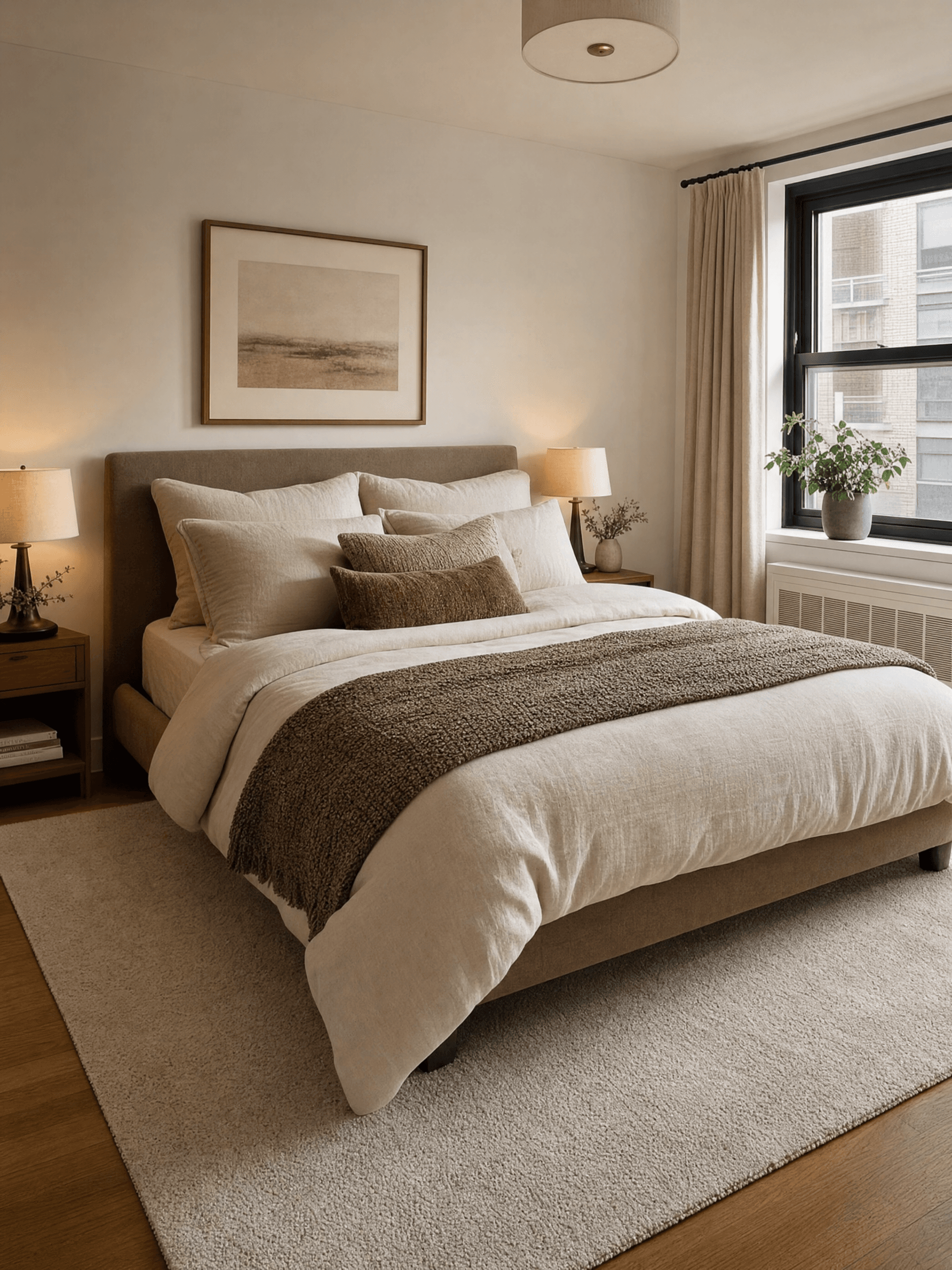
A rug makes a bedroom feel softer both visually and physically. It can also help define the sleeping area, which is useful when the room is small.
The rug does not have to cover the entire floor. Position it so that it extends from beneath the lower portion of the bed and remains visible on both sides.
For a cozy look, choose a low-pile wool-style rug, a subtle vintage-inspired pattern, or a soft neutral texture.
Avoid a rug that is so small it appears to float in the middle of the floor. A slightly larger rug usually makes the room itself feel more generous.
10. Use Mirrors to Bounce Light Around the Room
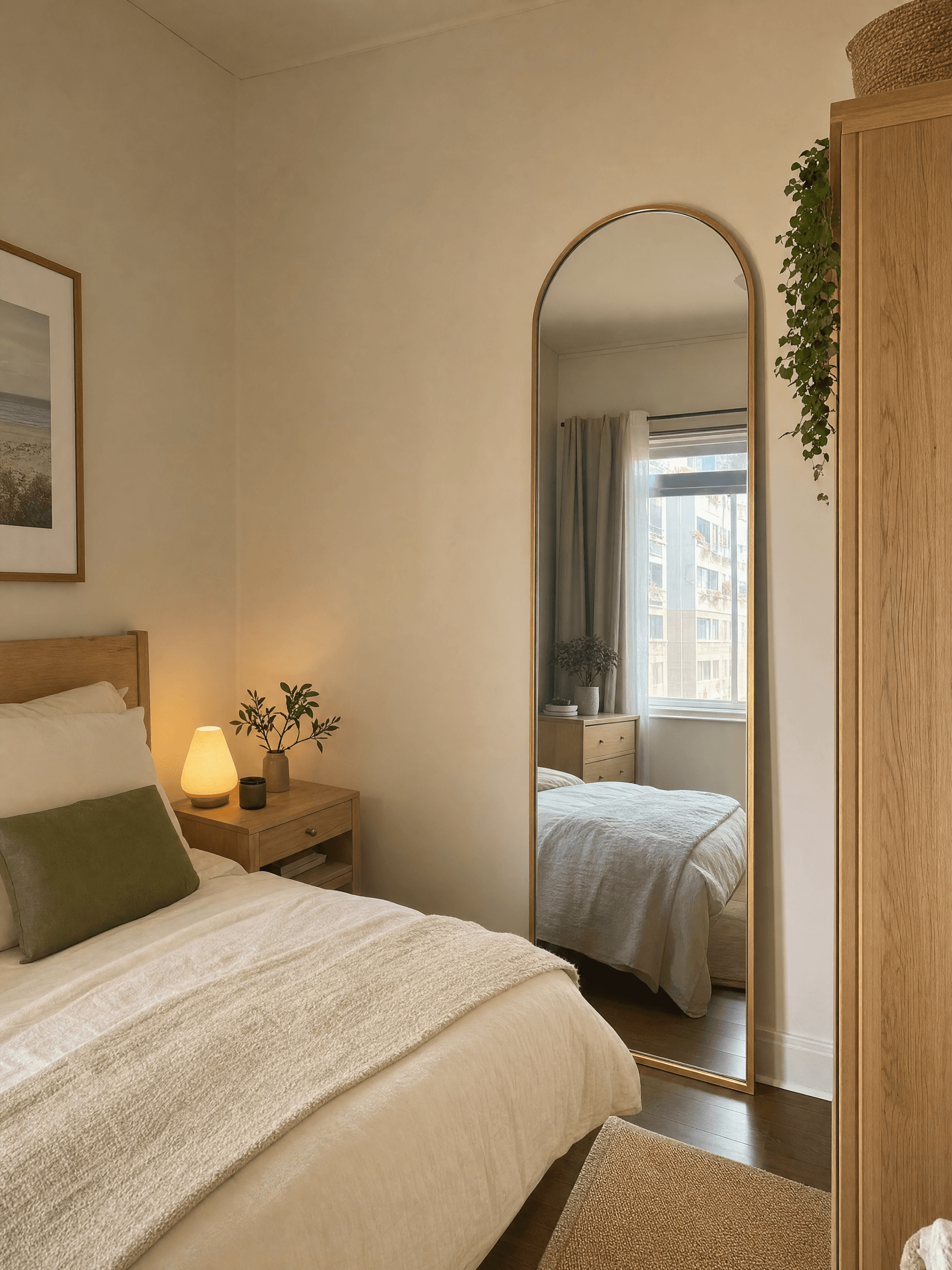
Mirrors are especially useful in small bedrooms that do not receive much natural light. Placing one near or opposite a window can help reflect daylight deeper into the room.
A tall floor mirror can also create the impression of additional depth. If floor space is limited, use a wall-mounted mirror instead.
Choose a frame that relates to another material already in the room, such as light wood, black metal, or warm brass.
One thoughtfully placed mirror is usually more effective than covering several walls with reflective surfaces.
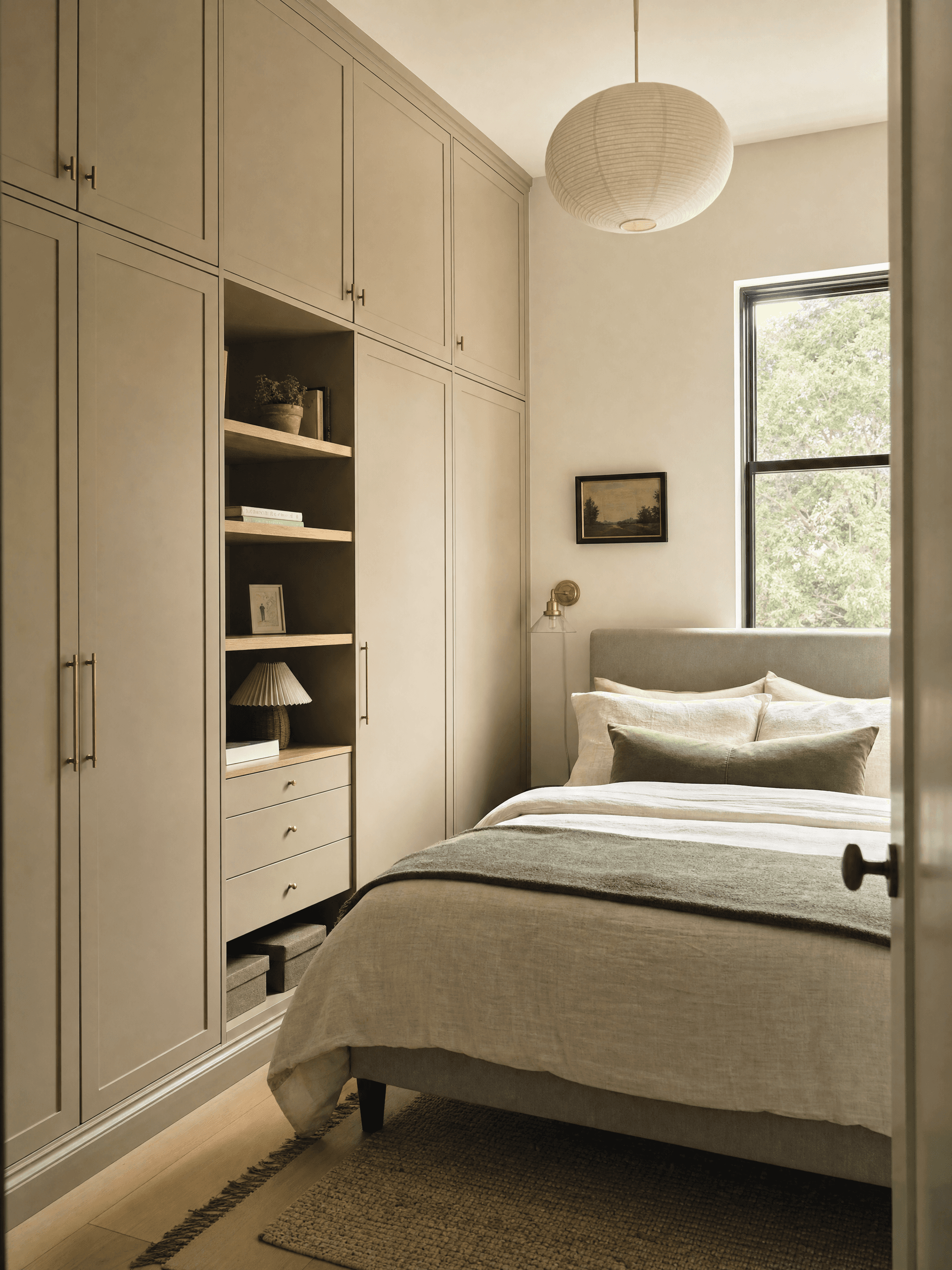
11. Take Storage All the Way Up
When floor space is limited, vertical space becomes much more valuable. Tall wardrobes, shelves, or cabinets draw the eye upward and provide more storage without occupying additional floor area.
Storage that reaches close to the ceiling also tends to look more built-in than a short cabinet with an awkward empty gap above it.
Use the highest shelves for items you do not need every day, such as seasonal bedding, luggage, or storage boxes.
Keeping the lower areas visually simple prevents tall storage from overwhelming the room.
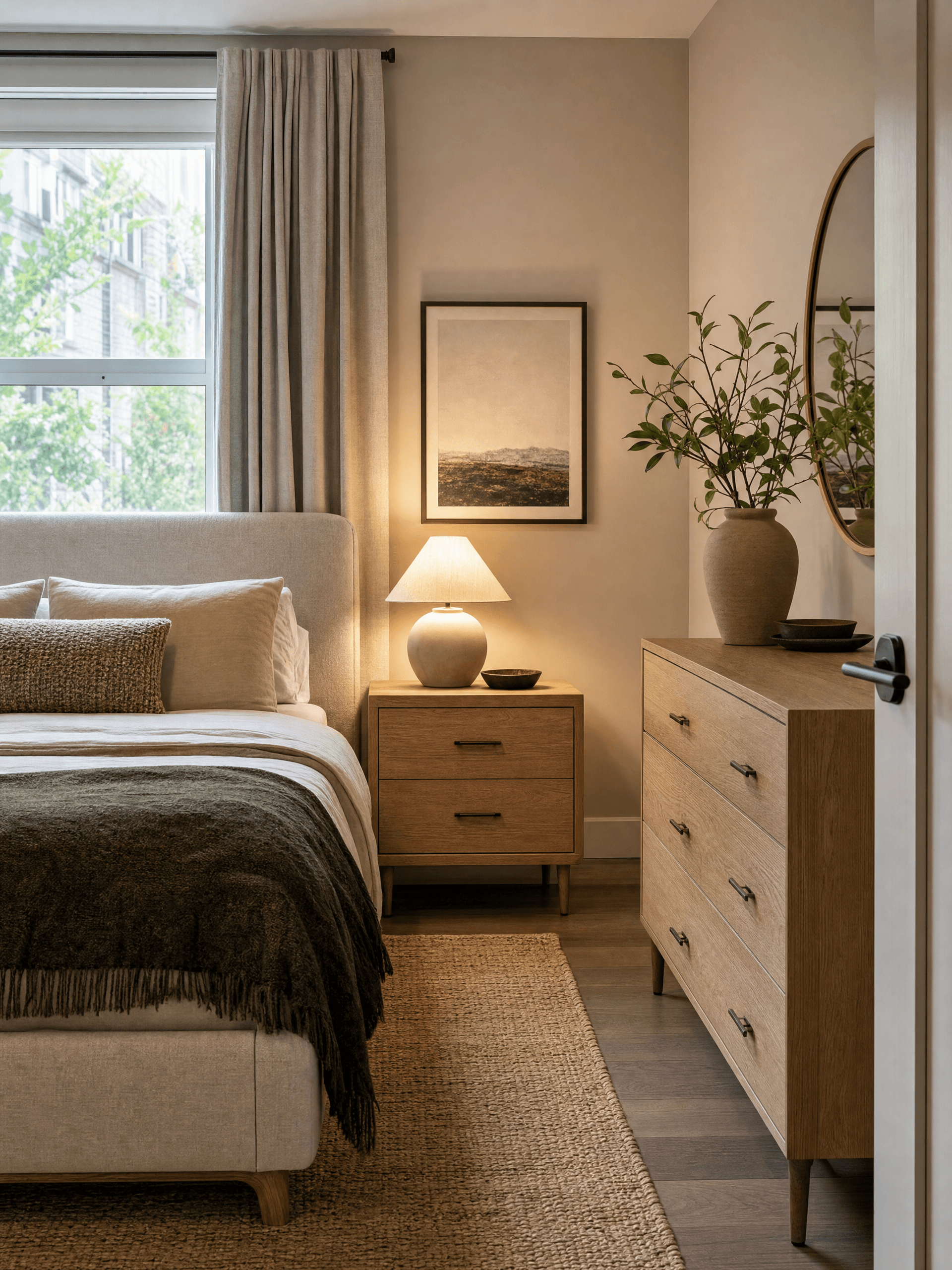
12. Choose Furniture With Visible Legs
Furniture that sits directly on the floor can sometimes make a tiny bedroom feel heavier. Pieces with visible legs allow more of the floor to remain visible, which creates a subtle sense of openness.
Look for slim bedside tables, dressers, benches, and chairs with raised bases rather than bulky solid forms.
This does not mean every piece needs delicate legs. One or two lighter-looking pieces are often enough to balance the visual weight of the bed.
The result is still cozy, but the room feels less crowded.
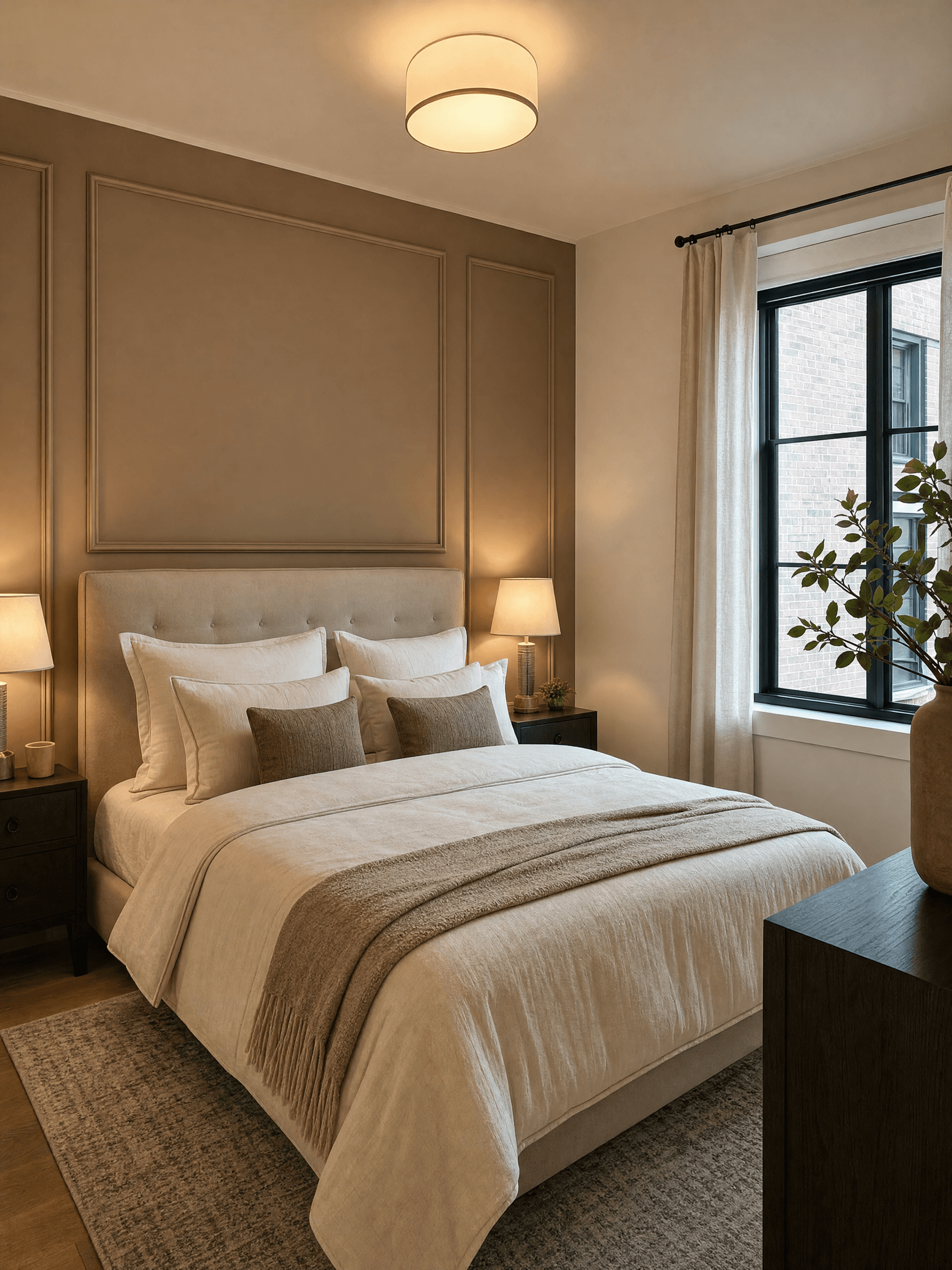
13. Create One Strong Focal Wall
A small bedroom does not need decoration on every wall. In many cases, creating one focal wall behind the bed looks more intentional.
You could use a muted paint color, subtle wallpaper, vertical wood detailing, or a carefully arranged group of framed prints.
Then keep the remaining walls simple. This gives the eye somewhere to rest and prevents the room from feeling overloaded.
For a timeless result, choose a focal-wall treatment that works with your bedding rather than competing with it.
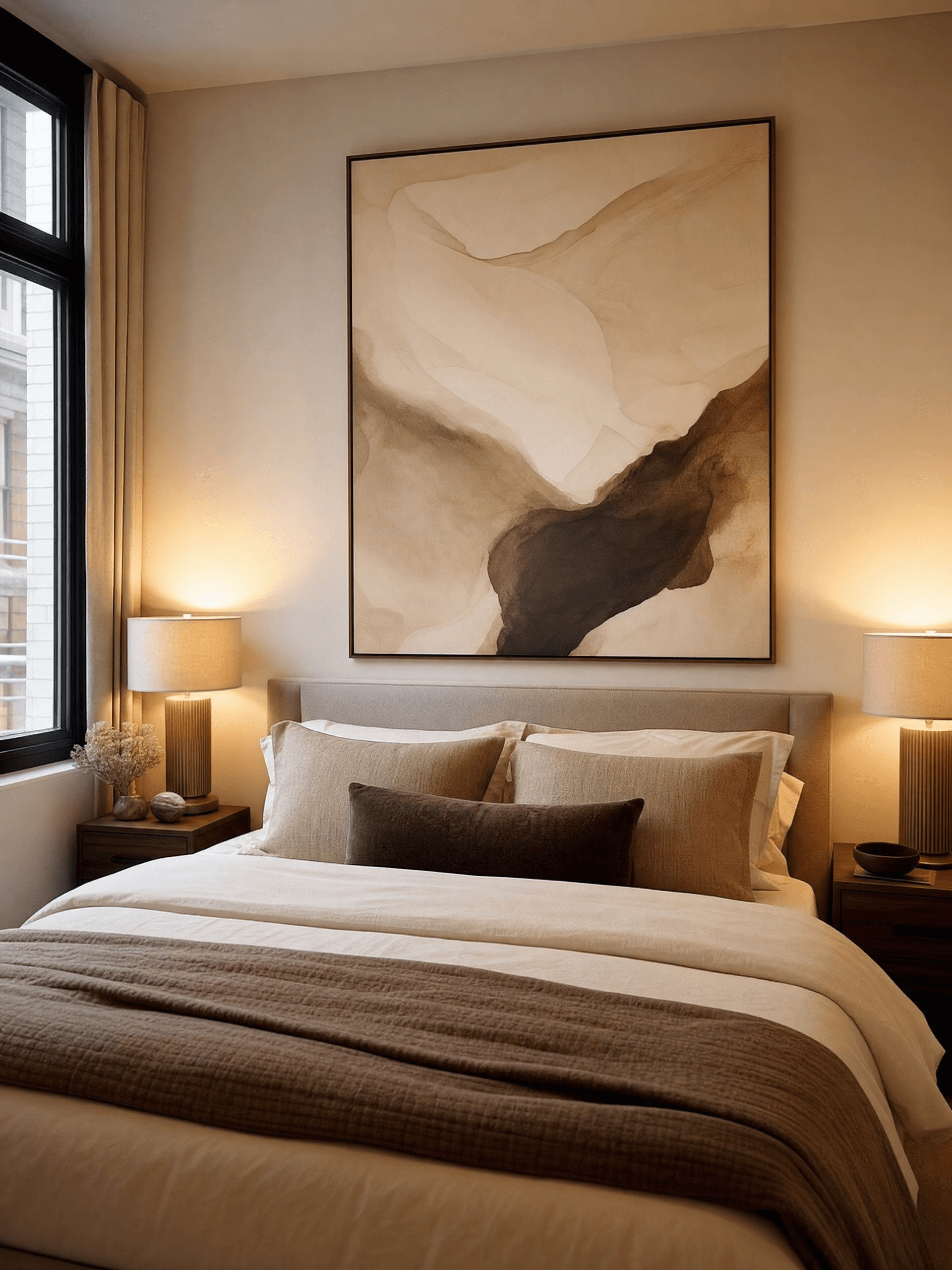
14. Style the Space Above the Bed
The wall above the bed is often the most visible empty area in a small bedroom. A single larger artwork or two coordinated frames can make the bed feel anchored.
Avoid filling the wall with many tiny pieces unless you intentionally want a gallery-wall look. Larger-scale decor generally appears calmer and more substantial.
Choose artwork with colors already present elsewhere in the bedroom. This helps it feel connected to the room rather than added as an afterthought.
If you rent, lightweight frames and removable mounting solutions can create a similar effect without permanent changes.
15. Add One Dark Accent
An entirely pale room can sometimes lack definition. A few darker details give the eye contrast and can make the lighter colors look richer.
Try a black lamp, dark wood nightstand, charcoal pillow, espresso-colored frame, or dark curtain rod.
You only need a small amount. Repeating the dark tone two or three times around the room usually creates enough visual connection.
The contrast can make even a very simple neutral bedroom feel more mature and carefully designed.
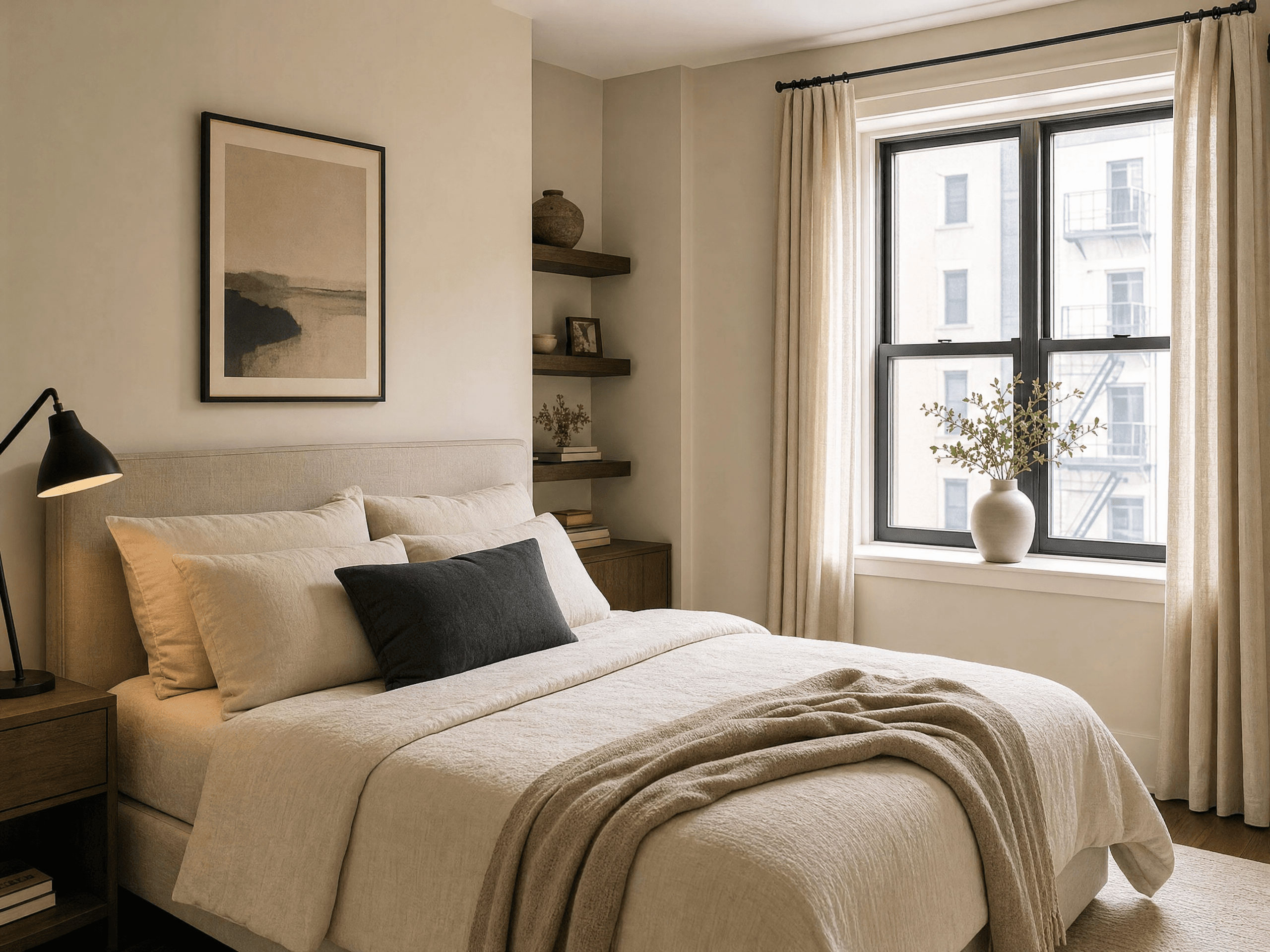
16. Make Under-Bed Storage Invisible
Under-bed storage is useful in small bedrooms, but visible plastic boxes can make the room feel more like a storage area than a retreat.
Choose matching low-profile containers, built-in drawers, or fabric storage boxes that disappear beneath the bed frame.
Use them for off-season clothing, extra bedding, shoes, or items you do not need daily.
The practical storage remains, but visually the bedroom stays calm and uncluttered. Hidden organization is one of the biggest differences between a small room that feels chaotic and one that feels polished.
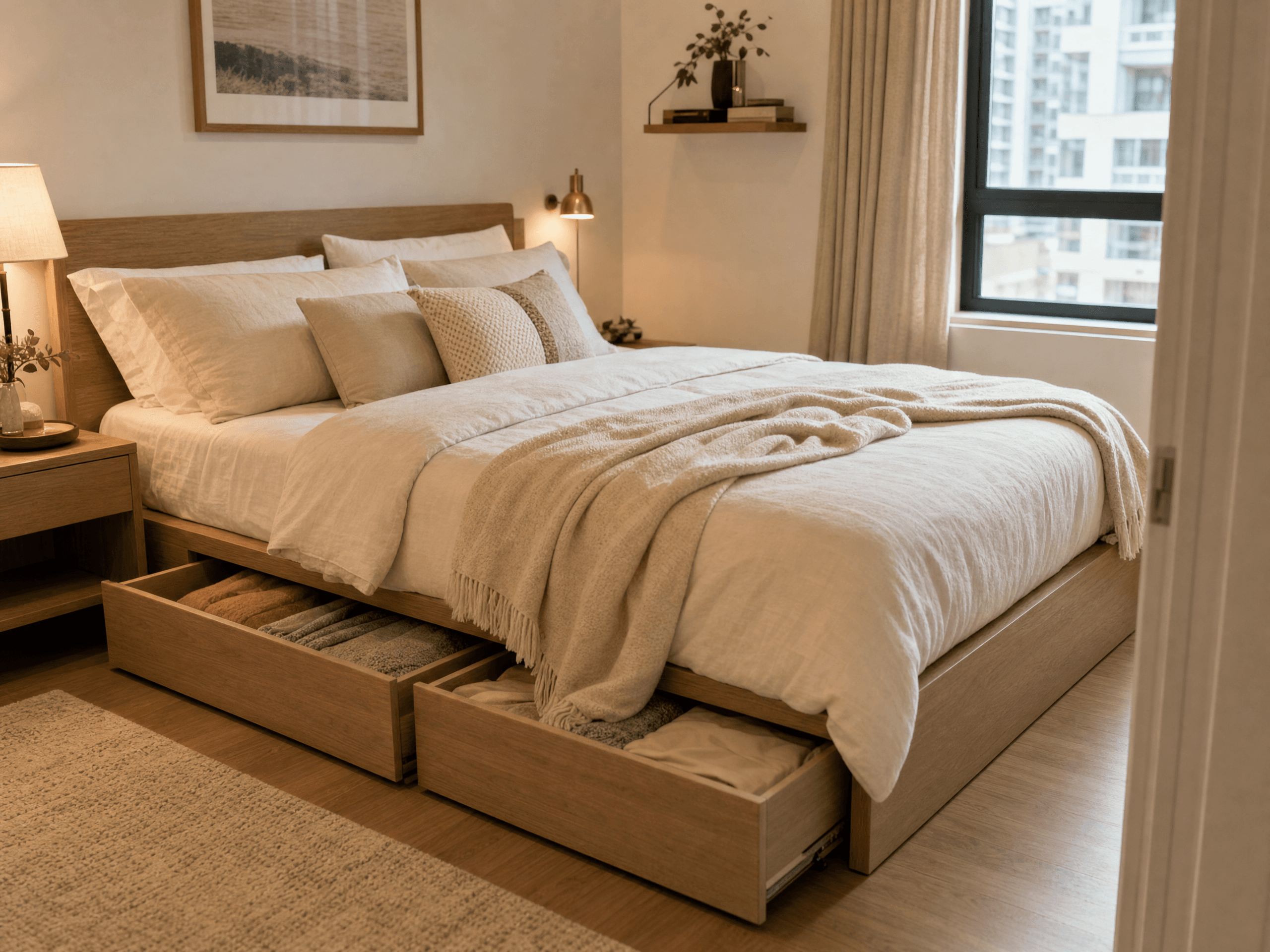
17. Use a Bench or Stool Instead of Extra Furniture
A compact bench or stool can perform several jobs without taking over the room. It can hold clothes temporarily, provide a place to sit, or serve as an extra surface when needed.
At the foot of the bed, choose a bench that is slightly narrower than the mattress so it does not visually overpower the space.
In an especially tight bedroom, a small wooden or upholstered stool beside a wall may be enough.
Multipurpose pieces help you add function without filling every available corner with furniture.
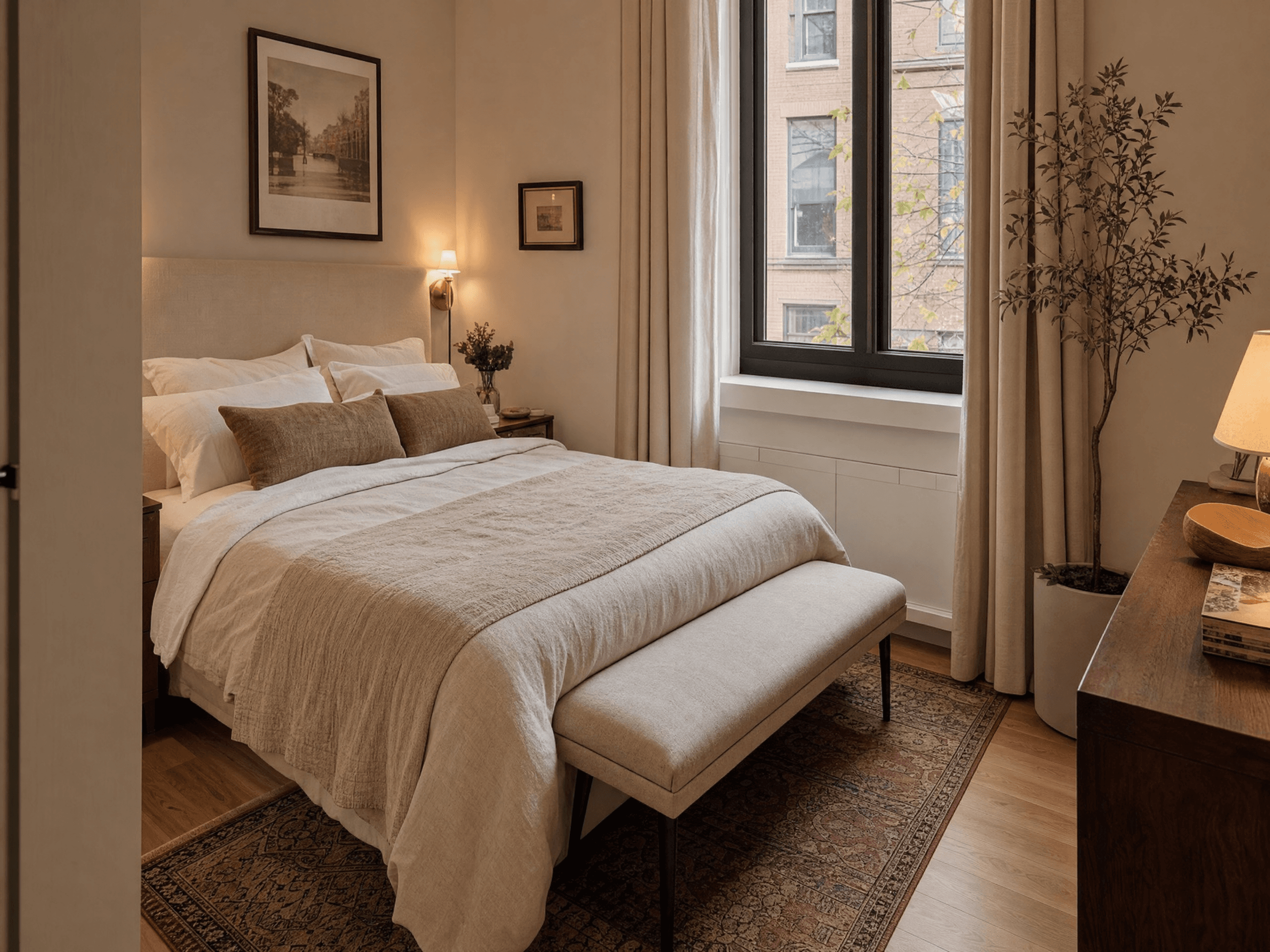
18. Bring in a Small Amount of Greenery
A little greenery can make a neutral bedroom feel more alive. You do not need to turn the room into an indoor garden.
One small plant on a nightstand or dresser, or a taller plant in an unused corner, is usually enough.
Choose a simple planter that works with the rest of the palette. Ceramic, stone-look, and woven containers are easy to integrate into cozy interiors.
If the bedroom receives very little daylight, a high-quality artificial plant can still provide the visual effect without becoming another maintenance task.
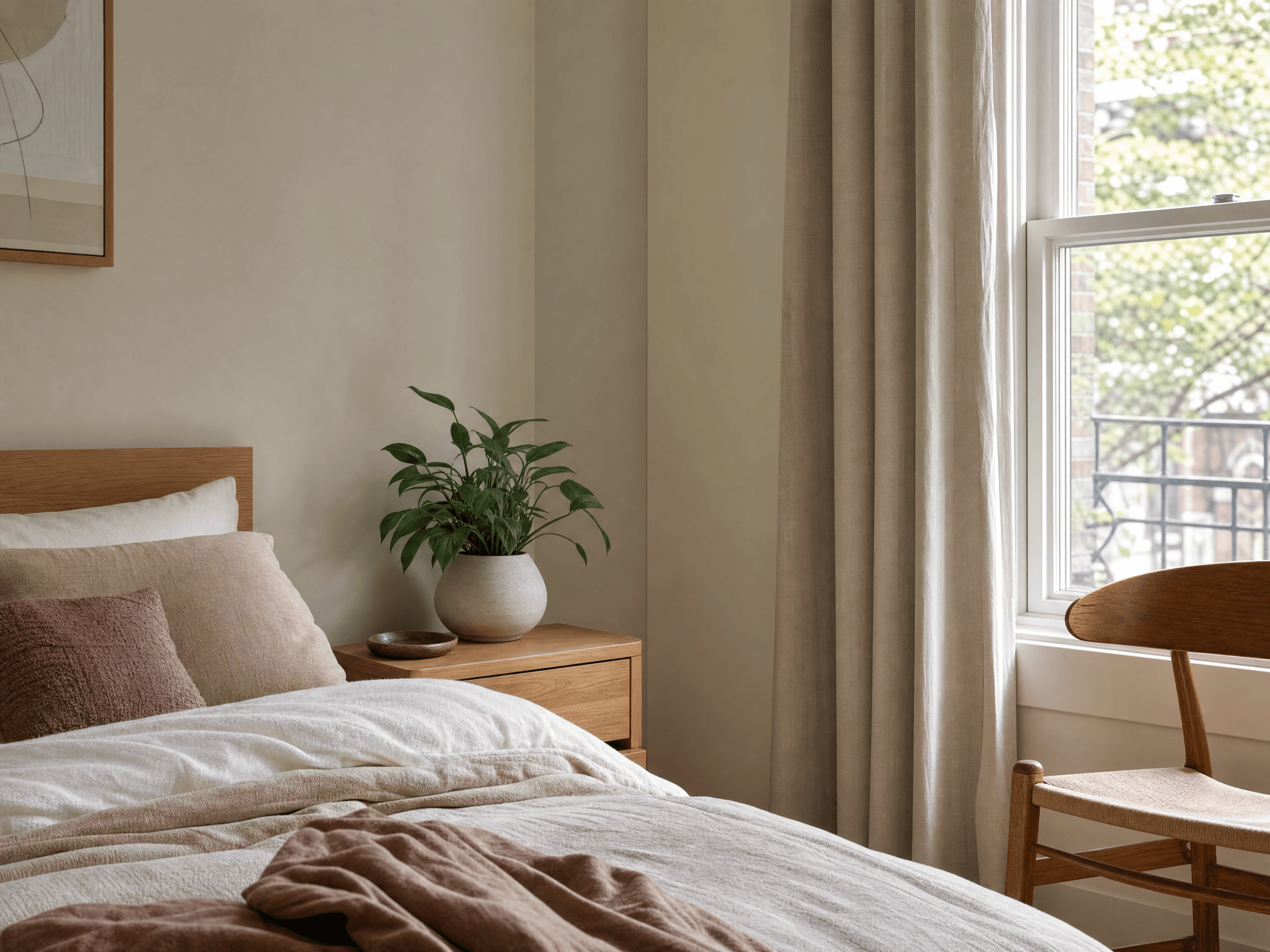
19. Keep Cords and Electronics Out of Sight
Visible charging cables, extension cords, and small electronics can quietly make an otherwise beautiful bedroom look messy.
Route charging cables behind the nightstand, use simple cable clips, and keep power strips away from the most visible areas.
If you charge several devices beside the bed, consider keeping the charger inside a bedside drawer or using one compact charging station.
This is a tiny detail, but removing visual clutter often has a bigger impact than buying another decorative object.
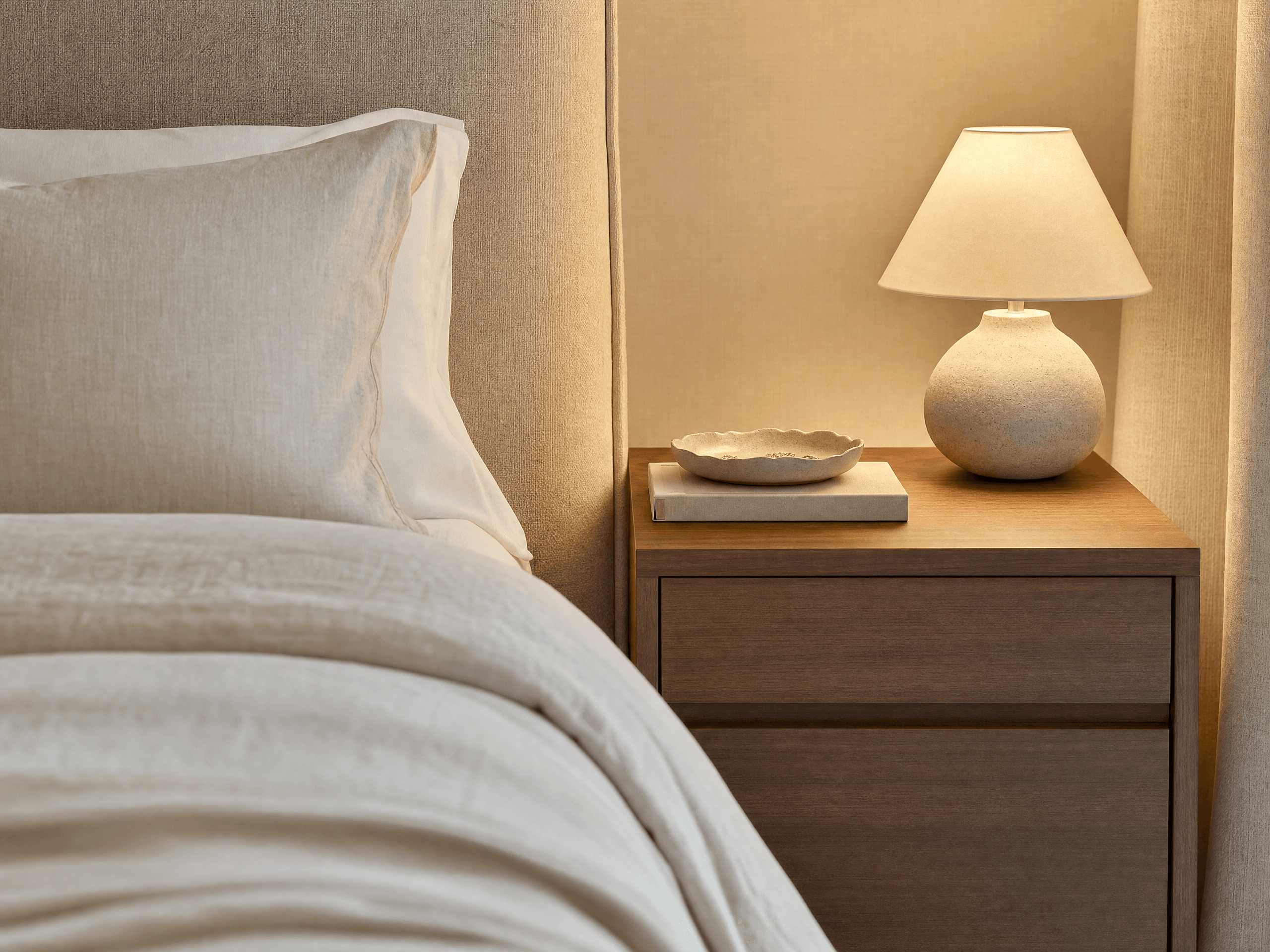
20. Leave Some Empty Space
One of the easiest mistakes in a small bedroom is trying to decorate every empty wall, shelf, and corner.
Luxury interiors often feel calm because not every surface is filled. Empty space allows the pieces you do have to stand out.
Try removing one or two objects from each visible surface and see how the room feels. You may find that the remaining decor suddenly looks more intentional.
A small bedroom still needs personality, but it also needs breathing room.
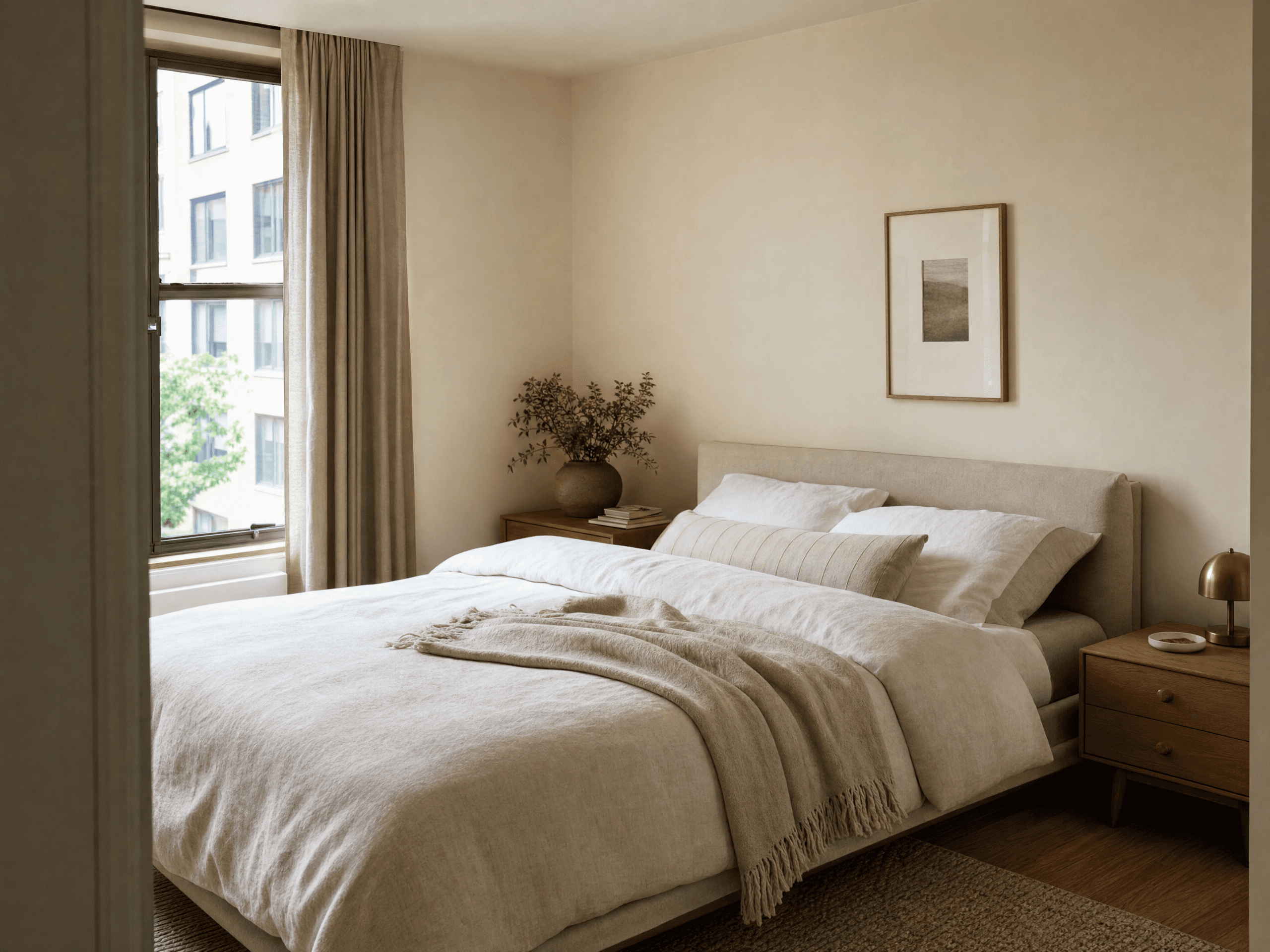
21. Keep the Final Look Intentional
The most expensive-looking small bedrooms usually have one thing in common: the elements feel connected.
You do not need matching furniture sets. Instead, repeat a few colors, materials, and shapes throughout the room. If you use light oak on one side of the bed, introduce another small wood detail elsewhere. If your lamps include black metal, repeat a little black in a frame or curtain rod.
Before adding anything new, ask whether it supports the overall look of the room.
A bedroom feels luxurious when it looks edited rather than simply filled. Even inexpensive pieces can look elevated when the colors, proportions, textures, and lighting work together.
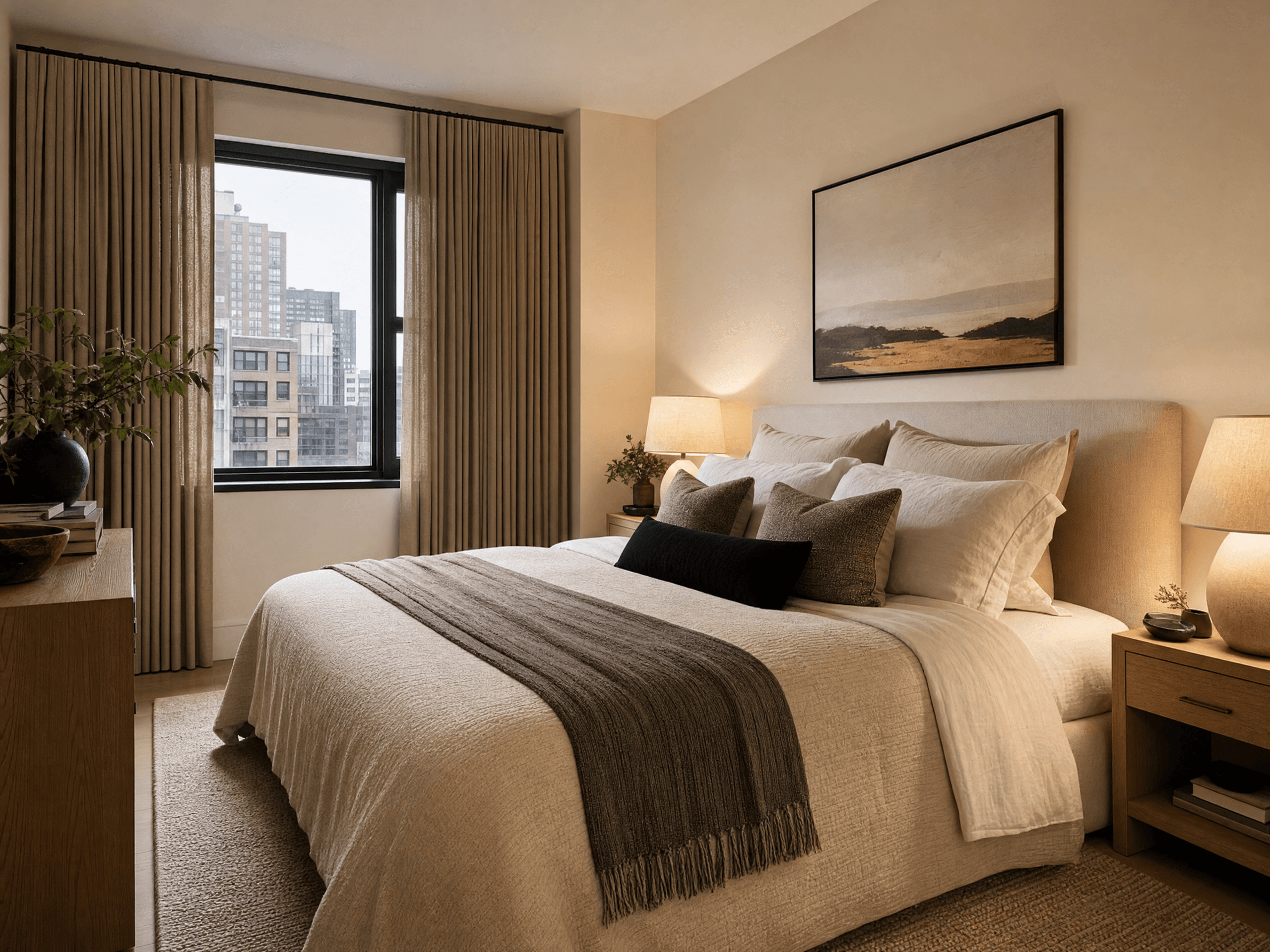
How to Make a Small Bedroom Look Expensive on a Budget
If you are working with a limited budget, prioritize the changes that affect the entire room before buying more decor.
Start with the bed because it is usually the visual center of a small bedroom. Improve the bedding, arrange the pillows, and add one textured throw. Next, adjust the lighting so the room has warm light at eye level instead of depending entirely on a bright ceiling fixture.
After that, reduce visible clutter and improve storage. Hide cables, clear the nightstand, organize under the bed, and remove decorative items that do not contribute to the overall look.
Finally, add one or two details that make the room feel finished: longer curtains, a properly sized rug, larger artwork, a mirror, or a small plant.
The most effective small bedroom makeover is rarely the one with the most new purchases. A consistent color palette, comfortable textures, warm lighting, and good proportions can make affordable pieces look far more sophisticated.
How can I make a small bedroom feel cozy without making it cluttered?
Focus on texture and lighting rather than adding lots of decorative objects. Layer bedding, use warm lamps, add a soft rug or curtains, and keep visible surfaces relatively clear. A few larger, intentional pieces usually feel cozier than many small accessories.
What colors make a small bedroom look bigger?
Light and medium neutral colors such as warm white, cream, beige, soft greige, and pale taupe can make a small bedroom feel open and calm. You can still use darker colors as accents to add contrast and depth.
How do you make a small bedroom look expensive?
Use a coordinated color palette, layered bedding, warm lighting, floor-length curtains, hidden storage, larger-scale artwork, and a few repeated materials or accent colors. Keeping clutter out of sight also makes a major difference.
What furniture is best for a very small bedroom?
Choose furniture that provides useful storage without feeling visually heavy. Slim nightstands, tall wardrobes, beds with hidden storage, wall-mounted lights, and pieces with visible legs can work especially well in compact rooms.
Can a small bedroom use dark colors?
Yes. Dark colors can add warmth and sophistication when used intentionally. In a very small bedroom, try them on one focal wall or through smaller accents such as lamps, cushions, frames, or furniture while keeping the rest of the palette balanced.